
Tapinanthus globiferus
Tapinanthus globiferus
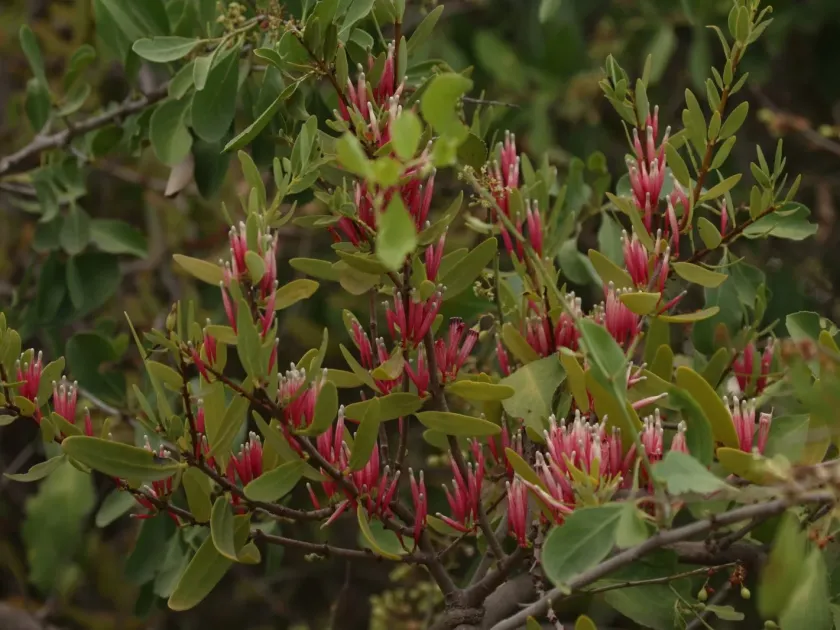
Description
Growing requirements
Tapinanthus globiferus is a parasitic shrub belonging to the Loranthaceae family. Unlike conventional crops, it is a wild species found throughout the tropical regions of Africa, where it thrives by attaching itself to the branches of various host trees.
The plant originates from the African savannahs and woodlands. It functions as a hemiparasite, meaning it derives water and nutrients from the host's vascular system through specialized structures called haustoria, while still maintaining the ability to perform photosynthesis through its green leaves.
Environmental requirements for this species are linked to the tropical and subtropical climate zones. It is highly resistant to drought, as it relies on the internal resources of its host plant rather than direct soil access, allowing it to colonize diverse environmental niches.
Botanically, the species is characterized by its distinct spherical inflorescences, from which it derives its specific name. These structures are adapted to attract avian pollinators, which are also the primary vectors for seed dispersal throughout the landscape.
In terms of human use, while it has been historically used in traditional botanical remedies by indigenous communities, it is primarily viewed as a significant biological agent that impacts the health and growth of woody vegetation in managed and wild ecosystems.
Main diseases and pests
The main threat posed by Tapinanthus globiferus is its destructive potential in silviculture and fruit orchards. By intercepting nutrients meant for the host's growth, it reduces the vitality of the host tree, leading to stunted growth, branch death, and increased susceptibility to other stressors.
Control methods mainly involve phytosanitary measures, such as the pruning and removal of infected branches to prevent the spread of the parasite. Managing the bird populations that act as seed vectors is also a theoretical, though challenging, component of regional parasite control strategies.