
Tapinanthus dependens
Tapinanthus dependens
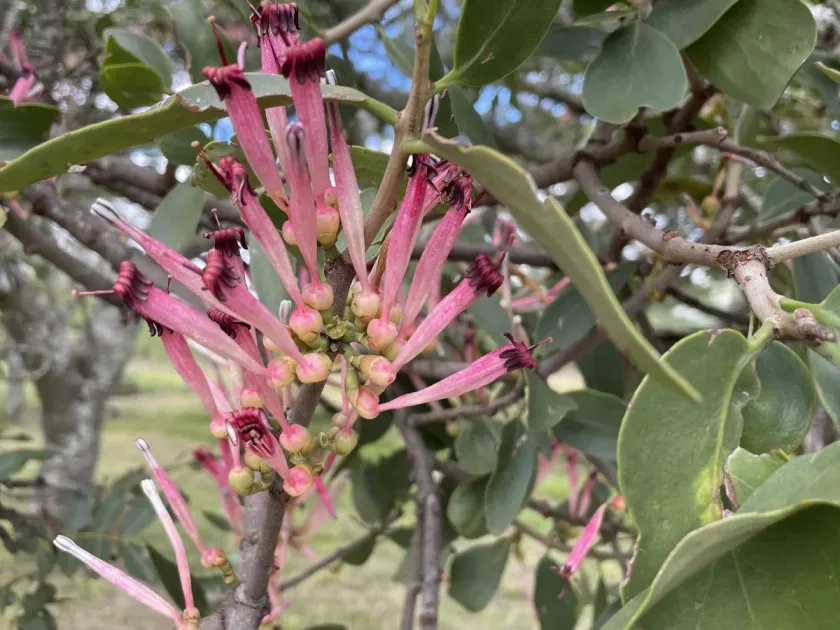
Description
Growing requirements
Tapinanthus dependens belongs to the Loranthaceae family and is recognized as a hemiparasitic shrub that typically grows on various tree species.
The species is native to African tropical regions, thriving in environments where host trees provide sufficient physical and physiological support for its development.
The plant possesses specialized organs known as haustoria, which penetrate the host's bark and phloem to extract essential water and nutrients.
Climatic requirements focus on tropical and subtropical patterns, emphasizing the need for stable humidity and consistent light availability within the canopy.
Despite being photosynthetic, the plant relies entirely on the host tree's xylem for moisture, making it highly dependent on the physiological status of its host.
Main diseases and pests
In forestry and horticulture, Tapinanthus dependens is categorized as a parasitic pest that disrupts the nutrient flow of the host tree.
Heavy infestation leads to the gradual decline of the host's vitality, resulting in stunted growth and eventual death of infected branches or the entire tree.
The spread of this parasite is facilitated by birds, which consume the berries and transport seeds to neighboring trees, ensuring rapid colonization.
Integrated management is essential, involving the manual removal of infected branches and monitoring of host trees to detect early signs of parasite attachment.
Chemical control remains difficult due to the close physiological connection between the parasite and the host, placing focus on preventive pruning practices.