
Phragmanthera capitata
Phragmanthera capitata
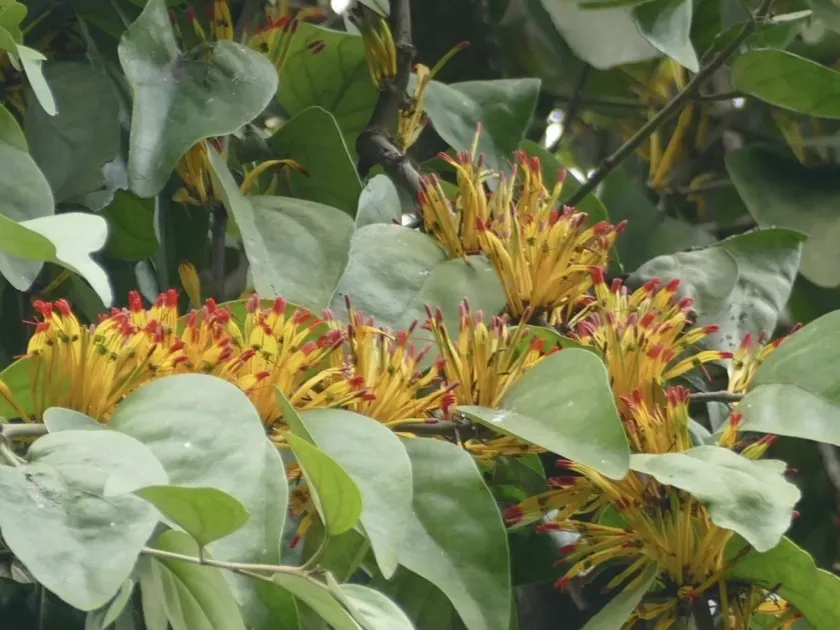
Description
Growing requirements
Phragmanthera capitata is a species of flowering plant in the family Loranthaceae. This woody shrub acts as a hemiparasite, meaning it produces its own energy via photosynthesis while deriving water and mineral nutrients from its host plant.
The plant is native to tropical Africa, inhabiting a variety of environments ranging from dense forest canopies to scattered savannah trees. It shows a high degree of host specificity but can colonize a broad range of woody plant species, including commercially important crops.
Botanically, the species is identified by its opposite, leathery leaves and terminal clusters of flowers. These flowers are specialized for pollination by birds, which also play a major role in seed dispersal by moving the sticky seeds between different trees.
The growth and establishment of Phragmanthera capitata are heavily influenced by ambient humidity and the availability of suitable host tissues. It relies on the host's vascular system to survive prolonged dry spells, making it a persistent resident of its host tree.
From an agricultural standpoint, it is viewed as a significant pest. Management practices involve integrated pest control measures to prevent the spread of the parasite within orchards, protecting the host trees' structural integrity and overall health.
Main diseases and pests
The primary threat posed by Phragmanthera capitata is the gradual depletion of the host tree's resources. Extensive infestation can lead to stunted growth, reduced fruit production, and eventually the death of heavily colonized branches.
Manual removal is the standard agricultural response to infestation. Pruning of the infected tree parts must include the removal of the haustorial attachment point to ensure the parasite does not regenerate from the remaining vascular tissues.
Secondary infections occur when the parasite creates entry points through the bark of the host tree. These wounds often become sites for fungal or bacterial pathogens, causing further damage to the tree's health.
Biotic threats to the parasite include various insect herbivores that specialize in feeding on Loranthaceae species. While these insects exert some natural control, they are rarely sufficient to eliminate an established infestation in agricultural areas.
Sanitation practices, such as the disposal of removed parasitic material, are essential. If left on the ground, the seeds may still be transported by local fauna, maintaining the cycle of infection within the plantation environment.