
Oryctanthus occidentalis
Oryctanthus occidentalis
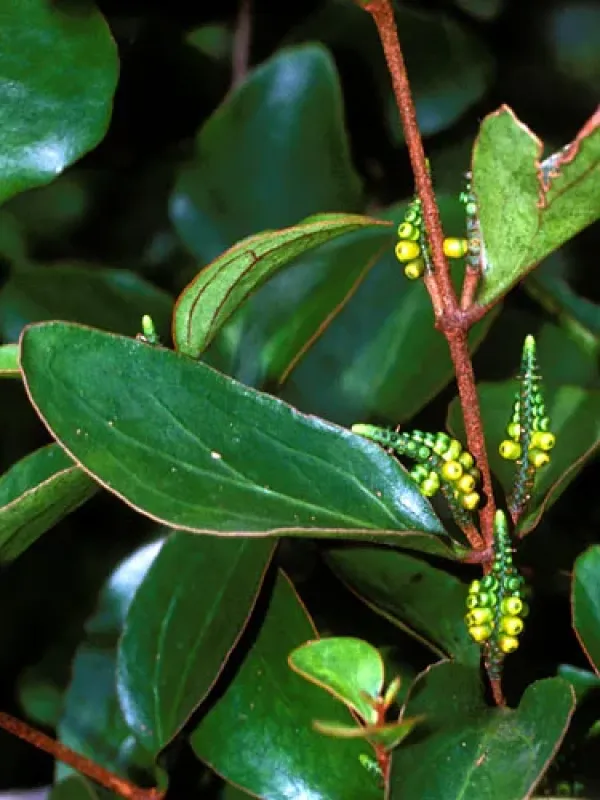
Description
Growing requirements
Oryctanthus occidentalis is a tropical hemiparasitic plant belonging to the Loranthaceae family. It is strictly not an agricultural crop but rather a parasitic organism that often infests trees in tropical ecosystems and agricultural plantations.
The plant is native to the tropical regions of Central and South America. It thrives in high-humidity environments, typically occurring in rainforests and humid forest edges where there is an abundance of host trees for colonization.
Botanically, it utilizes haustoria to anchor itself onto the branches of host plants. By penetrating the xylem and phloem, it extracts water and essential minerals from the host, supplementing this with nutrients produced via its own photosynthesis.
Climate requirements for Oryctanthus occidentalis are tied to the tropical climate, specifically the need for warm temperatures year-round and high moisture levels for seed germination and successful attachment to host branches.
In agricultural contexts, it acts as a pest. It often infests economically important species such as coffee, cacao, and citrus. The parasitic load can lead to a significant decline in host health and reduces the overall yield of the plantation.
Main diseases and pests
Natural enemies of Oryctanthus occidentalis include various species of insects that feed on its leaves and stems, providing a level of natural biological control within native ecosystems.
While the plant is hardy, it can be susceptible to fungal infections in environments with poor air circulation, although these are rarely used as a control strategy in commercial farming.
Management of this pest involves regular manual removal of infested branches. This pruning process must be conducted carefully to prevent the spread of seeds and to minimize damage to the tree-host.
The parasitic nature of this plant often weakens the host, making the tree more susceptible to secondary pests and various wood-boring insects, which significantly damages the plantation.
Due to the lack of effective chemical controls that do not harm the primary crop, preventive monitoring and early removal of small infestations remain the best practices for orchard maintenance.