
Oryctanthus cordifolius
Oryctanthus cordifolius
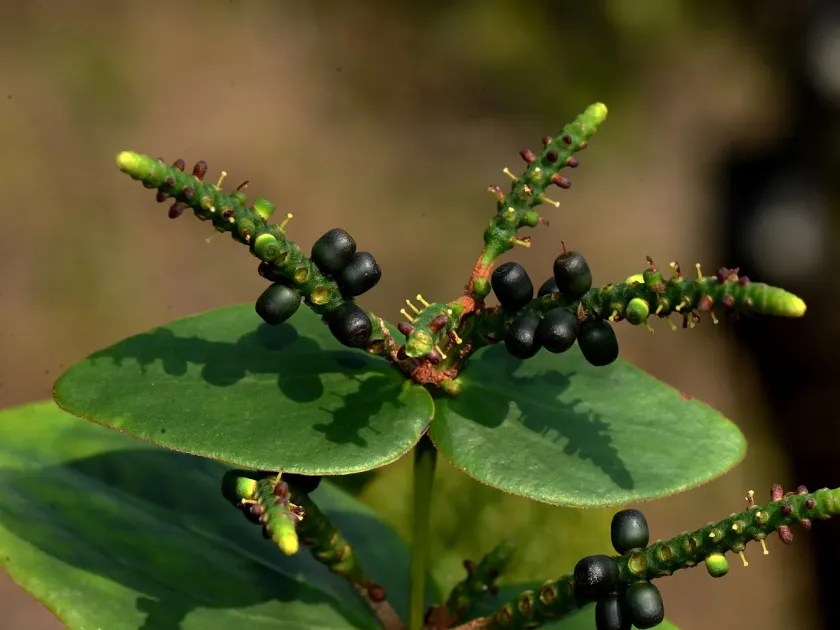
Description
Growing requirements
Oryctanthus cordifolius is a hemiparasitic plant belonging to the Loranthaceae family. While not cultivated as a crop, it serves as a significant biological entity in tropical ecosystems, where it functions as an epiphyte attached to the branches of various host trees.
The plant possesses a unique mechanism for nutrient acquisition. Using specialized structures known as haustoria, it penetrates the xylem of its host tree, effectively siphoning off water and essential nutrients while still maintaining the ability to perform photosynthesis through its green, heart-shaped leaves.
Its natural range encompasses tropical areas across Central and South America. The plant thrives in environments characterized by high humidity levels and year-round stable temperatures, which are essential for its continued development and the survival of its seed dispersal mechanisms.
Regarding environmental requirements, the plant does not rely on soil as a growth medium but instead requires healthy host canopy structures. It is highly sensitive to frost and cold stress, necessitating a tropical or near-tropical climate to thrive without significant disruption to its physiological processes.
The dispersal of this species is largely dependent on avian vectors. Birds consume the fruits and deposit the sticky seeds onto the bark of trees, where they germinate and initiate the development of a new hemiparasitic plant, thus perpetuating the species' life cycle.
Main diseases and pests
The primary threat to Oryctanthus cordifolius populations is habitat fragmentation and deforestation. As the availability of host trees decreases, the capacity for the species to spread and maintain viable populations is severely diminished, posing a risk to its local ecological balance.
The plant is susceptible to various fungal pathogens, especially in high-density canopy environments where poor airflow can create pockets of stagnant, moisture-laden air that favor the growth of molds and leaf-spotting diseases.
Insect herbivory is another challenge, with various beetles and caterpillars known to consume the foliage. While these interactions are part of the natural ecosystem, they can become detrimental if the plant is already stressed by environmental factors or a declining host tree.
Mechanical damage resulting from tropical storms or severe weather events can dislodge the plant from its host, leading to its eventual death. As an epiphyte, it lacks the ability to re-establish itself once it loses its physical substrate.
Competition for light and resources from other epiphytic species, such as bromeliads or orchids, can also limit the growth and reproductive capacity of the plant, often leading to reduced fitness in highly competitive canopy niches.