
Macrosolen ampullaceus
Macrosolen ampullaceus
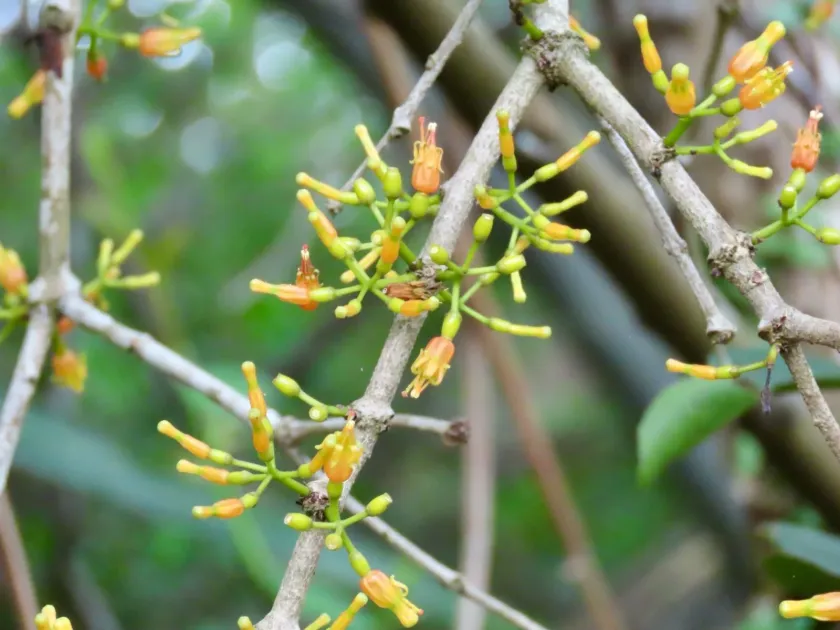
Description
Growing requirements
Macrosolen ampullaceus is a prominent member of the Loranthaceae family, characterized by its parasitic growth habit. It thrives as an epiphyte, attaching itself to the branches of host trees using specialized organs known as haustoria to extract essential nutrients and water.
The native distribution of this species is largely confined to the tropical regions of Southeast Asia. It requires a specific microclimate defined by high humidity and consistent tropical temperatures to successfully colonize new hosts, typically in rainforest or plantation environments.
Botanically, it features thick, leathery leaves designed for water retention and tubular flowers. These flowers are evolutionary adaptations meant to attract specific nectar-feeding birds, which play a crucial role in the dispersal of its sticky, seed-laden fruits across the canopy.
The plant does not rely on soil conditions but rather on the health and vitality of the tree it chooses as a host. Its growth cycle is synchronized with the availability of suitable branch junctions where seeds can adhere securely to the bark during the germination phase.
In terms of human use, Macrosolen ampullaceus has no agricultural value as a crop. Instead, it is classified as a significant botanical pest in many tropical agricultural settings, where it may colonize fruit-bearing trees and interfere with their normal physiological development.
Main diseases and pests
The primary agricultural threat posed by this species is the systematic weakening of host trees. By intercepting resources meant for the tree's growth and fruit production, the parasite often causes long-term decline and increased susceptibility to other pathogens.
Management practices in affected orchards focus primarily on manual eradication. Growers are advised to prune infected branches promptly, ensuring that the host tissue is cleared of any remaining haustorial attachments to prevent regeneration.
Surveillance programs are essential for preventing outbreaks in commercial fruit orchards. Early detection of small parasitic shoots allows for effective control before the parasite establishes a mature, deeply embedded root system.
While environmental factors like deforestation may limit its natural spread, the introduction of favorable host species in plantations can sometimes lead to localized population surges of this parasitic plant.
Biological studies regarding the natural enemies of Macrosolen ampullaceus are ongoing. Understanding the interaction between the parasite and its specific environment is key to developing integrated pest management strategies for the future.