
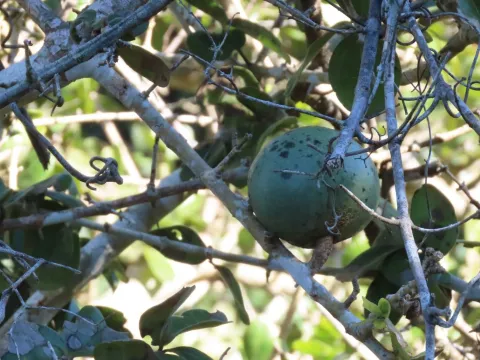
Strychnos madagascariensis
Strychnos madagascariensis
Strychnos madagascariensis, commonly known as the black monkey orange, belongs to the Loganiaceae family. It is a hardy evergreen tree or shrub native to the tropical forests and savannahs of Africa and Madagascar.
What the section contains
Strychnos madagascariensis
The plant thrives in well-drained soils, ranging from sandy to clay-loam textures. It is notably drought-tolerant, making it an excellent candidate for regions with unpredictable rainfall patterns.
Exposure to full sunlight is critical for the healthy development of the canopy and fruit maturation. It requires a warm, frost-free climate to maintain its evergreen leaves and productive metabolism.
Botanically, the species is distinguished by its spiny branches and leathery leaves, which reduce transpiration. These adaptations allow the plant to survive in harsh, sun-drenched environments.
Agronomic management involves maintaining soil moisture during the initial growth stages, though mature trees are largely independent once established in their environment.
The yield of the black monkey orange is highly dependent on the tree's maturity and environmental stability. The fruits are large, spherical berries with a woody shell protecting the nutritious pulp.
Harvesting is performed by picking mature fruits that have developed a characteristic coloration. The pulp is edible and highly valued for its sweet, distinct flavor in local communities.
To maximize production, orchard management should include periodic pruning of dead wood, which improves light penetration and airflow through the tree's dense structure.
Productivity increases as the tree ages, with established specimens providing consistent annual yields for decades under proper maintenance practices.
The pulp is often processed into jellies or consumed fresh, and the seeds have been studied for their potential utility in traditional oil extraction processes.
Common agricultural threats include infestations by scale insects and spider mites, which can cause significant leaf drop if left unmanaged during the dry season.
Root rot caused by poor soil drainage remains the primary fungal risk. Ensuring that the planting site has optimal hydraulic conductivity is essential for prevention.
Wood-boring insects may attack weakened trunks. Regular inspections and the immediate removal of infested branches are vital for maintaining the orchard's overall health.
Wildlife, specifically birds and monkeys, often present a significant challenge by consuming fruit prior to harvest, necessitating protective netting in small-scale plantings.
Integrated pest management strategies focusing on biological control are recommended to maintain the ecological balance and ensure a sustainable yield of fruit.