
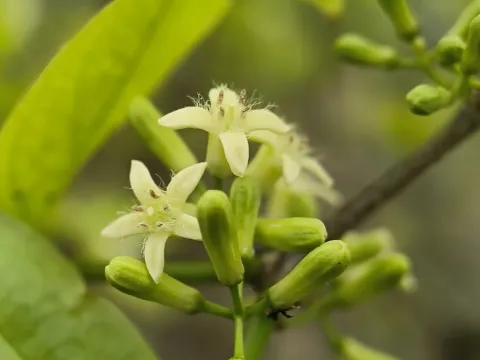
Strychnos potatorum
Strychnos potatorum
Strychnos potatorum is a perennial tree species, and its propagation is typically achieved by sowing seeds into well-prepared seedbeds or nursery containers. Given the hard seed coat, pre-treatment such as scarification or overnight soaking is recommended to improve germination rates.
What the section contains
Strychnos potatorum
The ideal time for sowing in tropical climates coincides with the beginning of the rainy season, which provides the young seedlings with sufficient moisture for establishment. In areas with marked seasonality, sowing is performed under protected nursery conditions.
A well-aerated substrate with neutral pH is essential for successful germination. Seeds are generally sown at a depth of 1 to 2 centimeters, allowing the seedling to emerge efficiently without being exhausted.
Once the first true leaves appear, seedlings require careful pricking out and gradual hardening off to direct sunlight. This stage is critical for the development of a robust root system, which will support the tree's future growth.
Transplanting to the permanent site is recommended once the saplings reach a height of 30 to 50 centimeters, maintaining a spacing of 5 to 7 meters to ensure adequate space for crown development.
Native to the tropical forests of India, Myanmar, and Sri Lanka, this member of the Loganiaceae family thrives in regions with distinct wet and dry seasons. It demonstrates significant resilience to temporary drought conditions.
Strychnos potatorum prefers well-drained, fertile loamy soils but can adapt to heavier soil types provided that waterlogging is prevented. Being a light-demanding species, it requires open sunlit areas for optimal photosynthetic activity.
Temperature requirements range between 20°C and 35°C, as the tree is sensitive to frost and extreme cold. While young trees require regular irrigation, mature specimens become highly drought-tolerant due to their deep taproot systems.
To enhance yield and plant health, organic fertilizers should be applied to the base of the tree annually. This practice encourages rapid biomass accumulation and fruit production.
Protection from high winds is necessary during the early growth stages, as the trunks of young trees are susceptible to snapping or mechanical damage before they become fully lignified.
Fruit production typically begins 5 to 7 years after planting, depending on site conditions and care. The tree yields a steady crop of fruits containing the valuable seeds used as natural water coagulants.
Annual yields vary based on climatic conditions and rainfall patterns. In favorable environments, a mature tree can produce hundreds of fruits, which ripen incrementally throughout the harvest season.
The yield of this species holds significant social and economic value in regions where seeds are used for community water purification. Standardizing harvest protocols is essential for ensuring product quality.
Proper storage is crucial for the longevity of the seeds' coagulation properties. Seeds must be kept in cool, dry conditions to prevent the growth of fungal pathogens that can degrade the active components.
Beyond seed production, the species is also valued for its timber, which is known for high durability and resistance to wood-boring insects, providing additional economic benefits to farmers.
Common pests affecting Strychnos potatorum include scale insects and spider mites, which primarily target foliage during dry spells. Regular monitoring and integrated pest management are necessary to control these populations.
Fungal diseases, such as leaf spot or root rot, may arise in conditions of poor ventilation or waterlogged soils. Maintaining good drainage and proper spacing between trees are the best preventative measures.
Root rot is particularly dangerous and can lead to rapid decline in older trees. Avoiding stagnant water in the root zone is the primary defense against such soil-borne pathogens.
Wood-boring beetles can pose a risk if the trunk is damaged by mechanical equipment or improper pruning. Protecting the bark and ensuring rapid healing of any wounds is vital for long-term health.
An integrated approach involving biological control agents and routine sanitary pruning helps keep disease and pest populations at levels that do not impact overall tree productivity.
Harvesting involves manual collection of the fruits once they reach their characteristic yellow-orange or brown maturity stage. Great care must be taken to ensure the internal seeds remain intact during the harvesting process.
Once harvested, the fruits are processed to remove the pulp, which can be recycled as organic manure. The freed seeds are then gathered for further preparation and drying.
Drying is performed in shaded, well-ventilated areas to allow for gradual moisture loss. This step is essential to preserve the flocculating agents contained within the seed endosperm.
Seeds are sorted by size and weight, with damaged or malformed specimens discarded. High-quality seeds are then packaged to maintain their functionality for water treatment applications.
Proper storage packaging must be moisture-resistant and pest-proof to ensure that the active natural coagulants remain effective from the time of harvest until their ultimate use in water purification.