
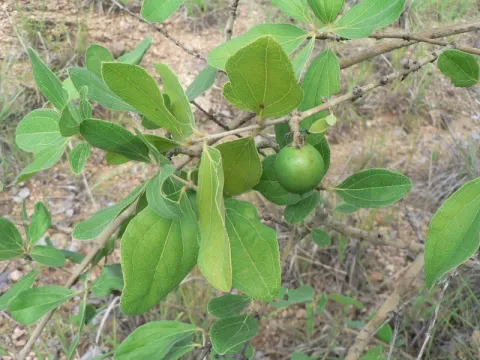
Strychnos innocua
Strychnos innocua
Strychnos innocua, commonly known as the native monkey orange, belongs to the Loganiaceae family. It is a tree native to the savanna regions of tropical Africa, characterized by its ability to thrive in harsh environments and poor soil conditions.
What the section contains
Strychnos innocua
The species prefers well-drained, sandy or gravelly soils and is highly adapted to tropical climates with a distinct seasonal cycle. Adequate sunlight is essential for healthy canopy development and regular fruiting cycles throughout the year.
Botanically, the tree is medium-sized with a dense, rounded crown. Its leaves are stiff and leathery, providing protection against excessive transpiration. The fruits are spherical, encased in a hard, woody shell, protecting the soft, edible pulp inside from external damage.
Economically, S. innocua is valued as a wild fruit source, often harvested by local communities. The pulp is rich in nutrients and is used both fresh and in processed forms such as beverages, jams, and fermented products.
Beyond food production, the plant serves various purposes in traditional medicine and rural construction. Its wood, though not widely used for major timber projects, is valued for its durability and resistance to local wood-destroying insects.
While Strychnos innocua is generally resistant to many pathogens, it can suffer from fungal leaf infections in excessively humid environments. Maintaining proper spacing and pruning helps minimize these risks significantly.
Insects, particularly fruit-boring larvae, pose the most significant threat to harvest yields. Integrated pest management strategies, focusing on orchard hygiene, are recommended to maintain fruit quality before harvesting.
Browsing by herbivores and gnawing by rodents are common problems for young saplings. Protective measures like physical barriers are essential for ensuring that young trees survive their initial growth years in the field.
Root system health is vital; poor drainage during the rainy season can lead to asphyxiation of the roots or fungal rot. Soil management should prioritize vertical water movement to prevent any long-term stagnation.
Ongoing research suggests that the plant maintains excellent genetic resilience against local diseases. This natural defense mechanism allows for cultivation without the necessity of intensive chemical intervention or fertilizers.