
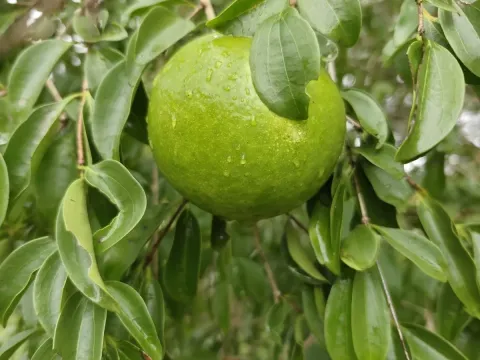
Strychnos
Strychnos
Strychnos (specifically Strychnos nux-vomica) is a deciduous or evergreen tree belonging to the Loganiaceae family, native to the tropical regions of Southeast Asia and India.
What the section contains


Strychnos
The plant thrives in tropical climates characterized by warm temperatures throughout the year. It requires deep, fertile, and well-drained soils to establish its extensive root system.
The tree exhibits a straight trunk with smooth, greyish bark and dark green, leathery, oval leaves. It produces small, fragrant, greenish-white flowers that develop into round berries.
Its fruits, often compared to oranges, contain seeds that are highly prized for their pharmaceutical properties. These seeds are the primary source of the alkaloids strychnine and brucine.
Cultivation of this species is typically found in specialized botanical gardens or controlled forest plots, as it demands specific ecological conditions similar to its native habitat.
Strychnos trees are naturally robust, with alkaloids in their tissues acting as a defense mechanism against various herbivores, insects, and common plant pathogens.
However, environmental stressors such as waterlogging can compromise the tree's health, making it susceptible to opportunistic fungal infections in the root zone.
Minor infestations of scale insects or mites may occasionally occur on younger specimens, requiring routine monitoring to ensure healthy growth.
Agricultural managers must prioritize safety protocols, as the high toxicity of the seeds makes handling a significant risk factor during maintenance activities.
Proper spacing between trees is essential to maintain airflow and reduce microclimatic humidity levels, preventing unwanted fungal development on the leaves.
The harvesting process begins when the fruits fully ripen and turn a characteristic yellow-orange color, signaling the maturity of the internal seeds.
Harvesting is labor-intensive, often done by hand, and requires stringent safety procedures due to the extreme biological potency of the plant's components.
Once harvested, the fruits are processed to extract the seeds. The seeds must be carefully cleaned of any pulp residue to prevent degradation during storage.
Drying is a critical step; it must be performed in controlled, well-ventilated areas to ensure the seeds reach the optimal moisture content for long-term preservation.
Post-harvest storage requires secure, labeled containers kept in restricted access areas, strictly following international safety regulations for hazardous agricultural materials.