
Grias
Grias
Propagation of Grias is primarily achieved through seeds, which exhibit a short period of viability, necessitating immediate sowing after extraction from the fruit. The ideal germination medium is a moist, nutrient-rich soil that mimics the forest floor of its native tropical habitat.
What the section contains


Grias
Seeds should be planted at a shallow depth and maintained in a high-humidity environment with constant warm temperatures. It is essential to ensure that the substrate remains consistently damp, as seedlings are highly vulnerable to dehydration during the initial growth stages.
Young plants develop slowly, focusing energy on building a robust root system before significant canopy growth occurs. During this time, they require complete shade and protection from harsh environmental conditions to establish themselves successfully.
Transplanting to the permanent location is recommended at the onset of the rainy season to facilitate root establishment. Proper spacing is crucial to allow for the future expansion of the canopy and to ensure adequate air circulation around the tree.
While vegetative propagation through cuttings is theoretically possible, it requires specialized horticultural techniques and controlled greenhouse conditions. Seed-based propagation remains the most reliable method for establishing new plantations.
Grias belongs to the Lecythidaceae family and is native to the humid tropical forests of Central and South America. The crop thrives in environments with consistent rainfall and high humidity, avoiding any pronounced dry seasons.
The plant requires deep, well-drained, and fertile soils rich in organic matter to reach its full potential. It naturally occurs in riverine areas, suggesting a tolerance for high water tables, provided the soil remains aerated and not stagnant.
An optimal year-round temperature range of +22°C to +30°C is essential for healthy development. Grias is extremely sensitive to cold; even mild temperature drops or exposure to cool, drying winds can cause significant physiological stress and defoliation.
As a shade-tolerant species, Grias performs well in multi-layered agroforestry systems, where it can benefit from the protection provided by taller canopy trees. However, as it matures, it may require increased light penetration to support optimal flowering.
Soil management practices include the application of organic mulches to maintain moisture levels and enhance nutrient cycling. Avoiding the use of harsh synthetic fertilizers is advised to protect the delicate soil microbial community vital for tropical tree health.
The primary agricultural interest in Grias lies in its edible fruits, which are often called the anchovy tree due to the unique flavor profile of the fruit pulp. The yield potential increases significantly as the tree matures, typically reaching stable levels after several years.
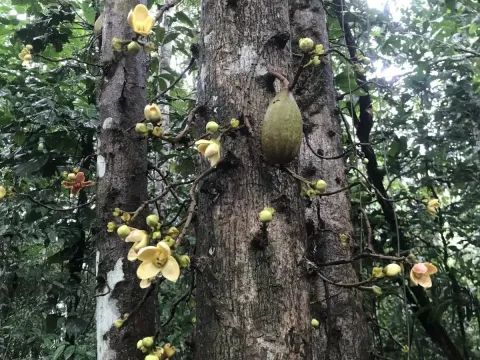
A notable botanical feature is cauliflory, where flowers and fruits emerge directly from the trunk. This trait simplifies harvest operations and allows for better monitoring of fruit development without damaging the fragile upper branches.
Both the fruit pulp and seeds are consumed, providing essential fats and proteins. These components are valued in local diets and are increasingly being explored for their nutritional benefits in broader culinary applications.
The wood of the Grias tree is also recognized for its quality, though it is usually a secondary byproduct of cultivation. The tree provides valuable ecological services, contributing to local biodiversity and maintaining soil structure.
Achieving consistent yields requires a healthy population of natural pollinators, which include various insects and bats. Protecting these pollinator populations is a critical aspect of modern sustainable management for Grias plantations.
Fungal pathogens represent the most significant threat to Grias, particularly in environments with poor air circulation or waterlogged soil conditions. These infections can lead to root rot and trunk decay, compromising the tree's health.
Pests, such as various tropical caterpillars and weevils, can cause substantial damage to the foliage and developing fruits. Regular orchard monitoring is essential for the early detection and management of pest outbreaks before they escalate.
Competition from weeds and secondary vegetation can severely stunt the growth of young Grias trees. Maintaining a clean cultivation area around the base of the tree is a fundamental practice in the first years of growth.
Phytophthora and other soil-borne diseases can be devastating if irrigation practices are not strictly controlled. Prevention strategies focus on proper drainage design and the maintenance of optimal spacing to ensure adequate airflow.
The loss of natural habitats negatively impacts pollinator diversity, which directly correlates to lower fruit set rates. Integrated Pest Management (IPM) strategies, which combine biological and cultural controls, are prioritized over heavy chemical use.
Harvesting is performed by hand, carefully removing ripe fruits directly from the trunk. The visual change in the fruit's skin color serves as the primary indicator of ripeness, and experienced workers identify the optimal window for picking.
The maturation process can be extended, requiring multiple selective harvest passes throughout the season. Because the fruits are perishable, they must be processed or brought to market within 48 to 72 hours of harvest to ensure quality.
Transportation requires careful handling and the use of ventilated containers to prevent mechanical damage and overheating. Proper post-harvest management is critical for maintaining the fruit's marketability and flavor integrity.
After harvesting, fruits are sorted to remove any damaged specimens, and seeds are extracted for either culinary use or future planting. Maintaining hygienic conditions during this stage prevents post-harvest spoilage.
Efficient organization of the harvest season maximizes profitability and ensures the long-term productivity of the plantation. Careful pruning and management of the tree structure during the off-season help facilitate smoother harvest operations in the following cycles.