
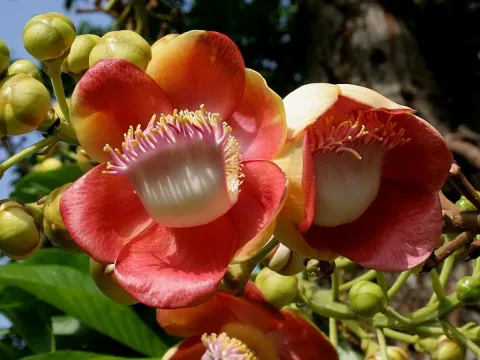
Couroupita
Couroupita
Propagation of Couroupita guianensis is primarily achieved through seeds, which must be sown immediately after removal from the fruit to ensure high germination rates.
What the section contains


Couroupita
The seeds require a warm, humid environment with consistent moisture and high-quality, well-draining soil to break their dormancy successfully.
Nursery propagation usually involves planting seeds in deep containers to accommodate the rapid development of the primary taproot.
Optimal germination temperatures should remain between 25 and 30 degrees Celsius, which mimics the natural tropical habitat of this Lecythidaceae family member.
Seedlings should be kept in protected environments until they develop sturdy stems and sufficient foliage, providing them with resistance against external weather fluctuations.
The cannonball tree is a native species of the tropical forests of South America, specifically the Amazon basin, thriving in consistently warm climates.
It demands deep, fertile, and well-drained soil, as it is highly sensitive to waterlogged conditions that can cause root decay in various soil types.
This species requires high ambient humidity and avoids areas with significant temperature drops, making it unsuitable for cultivation outside the tropics.
While the tree thrives in full sun once established, young specimens benefit from light shade to prevent leaf scorching during their development phase.
Regular maintenance includes monitoring soil acidity and ensuring the plant receives adequate space to allow for its massive trunk and crown expansion.
The Cannonball Tree is widely recognized for its spectacular, fragrant flowers and large, woody, spherical fruits that develop directly on the trunk.
While the fruit is not typically produced for mass market distribution, it is culturally and medicinally significant in the regions where it naturally grows.
The tree provides substantial biomass, and its various parts, including the bark and leaves, are utilized in local traditional healing practices for their medicinal properties.
In landscape design, this species is highly valued for its aesthetic appeal, serving as a landmark plant in botanical gardens and large estate grounds.
The wood, although soft and fibrous, finds limited use in artisanal woodcraft due to its unique structure and light weight compared to other rainforest hardwoods.
Common plant health threats include fungal infections that manifest as root or stem rot, primarily driven by excessive irrigation or poor drainage.
Pests such as scale insects and spider mites are frequent nuisances that require early identification and management to prevent foliage decline.
Insects that bore into the trunk or fruit can disrupt the development of the tree and affect the overall vitality of the plantation specimens.
Sanitation practices are critical; the prompt removal of fallen debris prevents the spread of pathogens that thrive on decaying organic material.
Integrated pest management, including the use of neem-based oils or other mild organic controls, is recommended for long-term health in high-value botanical collections.