
Careya
Careya
The genus Careya belongs to the Lecythidaceae family and includes large evergreen or deciduous trees. In their natural habitat, they are primarily distributed across tropical regions of South and Southeast Asia, including India, Myanmar, and Sri Lanka.
What the section contains


Careya
The culture has strict requirements for temperature conditions, preferring a hot and humid climate. These plants are sensitive to frost, which limits their commercial or ornamental cultivation to the tropical zone exclusively.
Soil preferences for this genus include well-drained, loamy, or alluvial soils. While the trees can adapt to various substrate types, they require consistent moisture levels for stable growth, particularly during the peak vegetation phase.
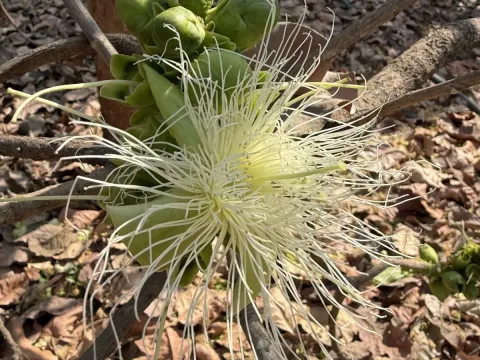
Botanically, Careya is characterized by large, leathery leaves and striking flowers with numerous stamens arranged in clusters. The fruit is a large berry containing many seeds, which is a defining feature of the Lecythidaceae family.
The economic importance of Careya is diverse: its bark is used in traditional medicine and for fiber production, the timber is utilized in construction, and the fruits and seeds are used in local culinary practices and herbal preparations.
The main threats to the genus are related to fungal infections caused by excessive moisture stagnation in the root zone. Furthermore, the trees can be affected by specific tropical pests that damage young foliage and shoots.