
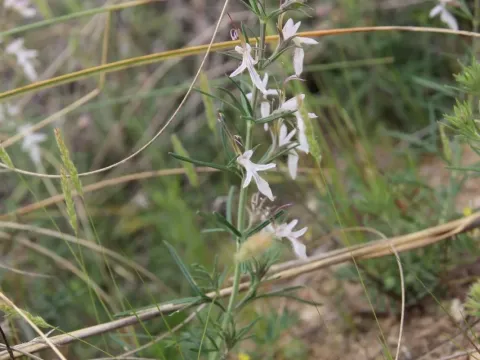
Teucrium pseudochamaepitys
Teucrium pseudochamaepitys
Teucrium pseudochamaepitys is a perennial herbaceous plant belonging to the Lamiaceae family. In agricultural practice, seeds are typically sown in late autumn (dormant sowing) or spring, following a cold stratification period to improve germination rates.
What the section contains
Teucrium pseudochamaepitys
For commercial cultivation, row planting is recommended with row spacing of 45 to 60 centimeters. This provides sufficient space for the root system to develop and allows for efficient mechanized weed control between rows.
The seeds are small and should be sown at a shallow depth of no more than 1 centimeter. Proper soil firming after sowing is essential to ensure good seed-to-soil contact and consistent moisture levels during the critical germination phase.
Propagation can also be achieved through vegetative methods, such as root division or softwood cuttings. Vegetative propagation is often preferred for maintaining the purity and vigor of selected cultivars in a production setting.
During the establishment year, maintaining a weed-free environment is vital, as the seedlings grow slowly and are easily outcompeted by aggressive weeds until they become fully established.
This species is a heliophyte, thriving in open, sunny locations. Full sun exposure is critical for the development of essential oils and other secondary metabolites, which are key for the plant's medicinal value.
The plant prefers light, well-draining soils, particularly sandy or rocky substrates. It is highly sensitive to waterlogging, making proper drainage a prerequisite for avoiding root diseases in the cultivation site.
Teucrium pseudochamaepitys is remarkably drought-tolerant and well-adapted to arid or semi-arid climates. It exhibits high resilience to heat, making it an excellent candidate for sustainable agriculture in water-limited environments.
The soil should have a neutral to slightly alkaline pH. Fertilization should be balanced, with a focus on phosphorus and potassium to enhance root development and plant health, while limiting nitrogen to prevent excessive, succulent vegetative growth.
Routine cultivation, such as light hoeing between rows, is necessary to maintain soil aeration and prevent the formation of a surface crust, which can impede water penetration and root growth.
The plant possesses inherent chemical defenses, such as essential oils and bitter principles, which make it relatively resistant to many common pests. However, improper environmental management can lead to susceptibility.
The most common disease threat is powdery mildew, particularly in conditions of high humidity and poor airflow. Preventive measures include ensuring proper plant spacing and avoiding overhead irrigation methods.
Root rot, often caused by pathogens like Phytophthora or Pythium, can occur if the soil remains excessively wet. Ensuring superior drainage and avoiding over-irrigation are the primary strategies for preventing these fungal threats.
Insects, such as aphids, can occasionally infest the plants, but these are typically managed through biological control or by maintaining a healthy, vigorous plant population that can naturally withstand light pest pressure.
Integrated pest management (IPM) practices, including regular field monitoring and the use of bio-fungicides, are recommended to maintain plant health without relying on broad-spectrum synthetic pesticides.