
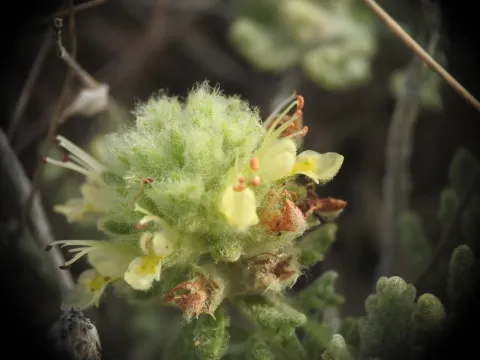
Teucrium rouyanum
Teucrium rouyanum
Teucrium rouyanum, commonly known as a type of germander, belongs to the Lamiaceae family. It is a perennial herbaceous plant known for its resilience and specific botanical properties that make it a valuable candidate for niche agricultural cultivation.
What the section contains
Teucrium rouyanum
The plant thrives in full sun exposure. It requires high light intensity to maintain its compact growth habit and to promote the synthesis of secondary metabolites within its glandular hairs.
The ideal soil profile for Teucrium rouyanum is a well-drained, porous substrate. It performs exceptionally well in sandy or rocky soils where internal drainage prevents the saturation of the root zone, which the plant is highly sensitive to.
As a Mediterranean-adapted species, it demonstrates significant drought tolerance. The presence of fine hairs on the foliage serves as an adaptive mechanism to reduce transpiration rates during periods of water scarcity.
Climatic requirements focus on warmth and good air circulation. In regions prone to high humidity, special attention must be paid to inter-row spacing to prevent fungal infections and root rot.
Harvesting Teucrium rouyanum is typically timed to coincide with the peak flowering stage. This is when the plant's essential oil profile is most complex and concentrated, offering the highest quality for commercial extraction.
The harvest method involves cutting the aerial parts of the plant. Careful management of the cutting height is essential to ensure that the plant retains sufficient basal growth to regenerate effectively for the next growing season.
Immediate post-harvest processing is critical for quality control. Drying must occur in a controlled environment with active ventilation to remove moisture quickly without degrading the heat-sensitive aromatic compounds.
Once dried, the biomass should be packaged in airtight, opaque containers to protect it from ultraviolet radiation and atmospheric moisture, which could otherwise compromise the integrity of the essential oils.
This crop is primarily valued for its applications in herbal medicine and the cosmetic industry, where its unique phytochemical profile is used in various formulations and specialty tinctures.