
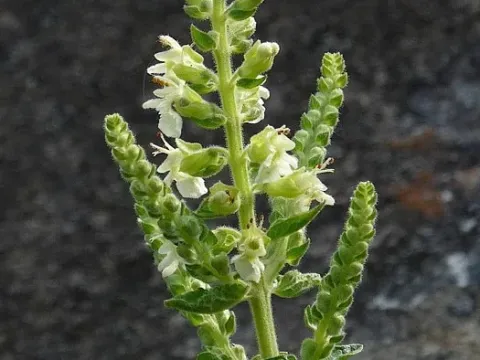
Teucrium pseudoscorodonia
Teucrium pseudoscorodonia
Teucrium pseudoscorodonia is a perennial herbaceous crop belonging to the Lamiaceae family. It is distinguished by its aromatic foliage and a unique structural growth pattern that allows it to thrive in harsh environments.
What the section contains
Teucrium pseudoscorodonia
The species originates from Mediterranean regions, where it has adapted to dry, stony slopes and nutrient-poor soils. This historical background dictates its preference for well-drained conditions in agricultural practice today.
Cultivation requires sites with high light intensity to ensure optimal production of secondary metabolites. The plant is drought-tolerant, making it suitable for areas where water conservation is a critical management factor.
Soil structure should be sandy or gravelly, with a neutral to slightly alkaline pH level. Ensuring soil aeration is essential, as waterlogging is the most common cause of failure in Teucrium plantations.
The plant holds significant potential for the pharmaceutical and cosmetic industries due to its essential oil content. It is also increasingly used as a low-maintenance ground cover in dry landscaping projects.
Fungal pathogens such as Phytophthora and various root rots pose a major threat, particularly in regions with unpredictable rainfall. Excessive humidity during the flowering stage can lead to gray mold development.
Pest pressures primarily include aphids and leaf-eating beetles. If left unmanaged, these pests can stunt growth and introduce secondary viral infections that compromise the quality of the harvested biomass.
Integrated Pest Management (IPM) is highly recommended for this crop. This includes the use of predatory insects and the application of botanical pesticides, which minimize chemical residues in the final product.
Weed management is a critical agronomic step, especially during the establishment phase. Using permeable mulching materials helps suppress weed growth while maintaining the required soil moisture level.
Routine scouting is necessary to identify early signs of nutrient deficiency or localized pest outbreaks. Corrective actions should be site-specific to maintain the integrity of the herbal crop yield.