
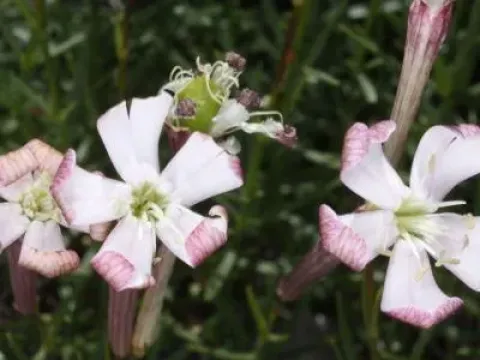
Montbret's germander
Teucrium montbretii
Teucrium montbretii, commonly known as Montbret's germander, belongs to the Lamiaceae family. It is a hardy perennial shrub native to the Eastern Mediterranean, particularly adapted to rocky and arid environments where many other species struggle to survive.
What the section contains
Montbret's germander
Botanically, the plant is distinguished by its silvery or downy foliage and unique flower spikes. This pubescence is a natural evolutionary mechanism that reduces water transpiration, allowing the plant to thrive under intense sun exposure.
Regarding climate, this species demands full sun and high levels of solar radiation. It is remarkably heat-tolerant and can endure extreme summer temperatures, making it a reliable choice for drought-prone landscape projects.
Soil requirements are centered on excellent drainage. Teucrium montbretii performs best in gritty, rocky, or sandy substrates. It is essential to avoid sites with poor drainage, as saturated soil during winter will quickly lead to root rot.
In terms of agricultural and landscape use, the plant is valued for its low-maintenance profile and its ability to act as a ground cover or a feature plant in rock gardens and Mediterranean-style landscapes.
The primary threat to the health of Teucrium montbretii is waterlogging. Excessive moisture in the root zone is the most common cause of plant death, especially during the dormant winter months when transpiration is low.
Fungal pathogens such as powdery mildew can affect the plants if air circulation is insufficient. Ensuring proper spacing during the planting phase is essential to allow for adequate airflow between individual specimens.
Pest issues include typical garden insects like aphids, which may colonize the soft terminal growth during the spring season. Usually, these infestations are minor and do not require heavy chemical intervention.
Maintaining the soil pH is generally straightforward, but extreme alkalinity or acidity should be avoided. A neutral to slightly alkaline environment is typically preferred for optimal nutrient uptake.
Regular monitoring for early signs of decay is the best management strategy. If damage is detected, it is recommended to prune the affected parts back to healthy tissue and ensure the site is adequately drained.