


Reference · Crops
Motherwort
Leonurus
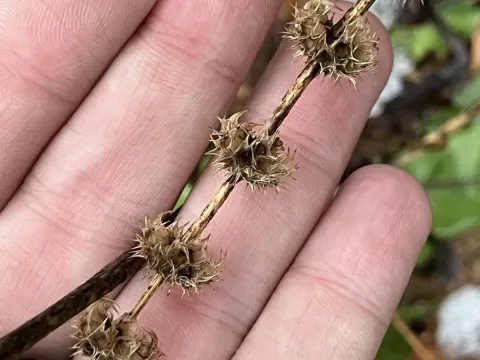
Motherwort (Leonurus) is a perennial herbaceous plant belonging to the Lamiaceae family. It is widely cultivated for its medicinal properties, primarily using seeds as the main propagation method.
3
items
What the section contains
Marketplace
Products in this section · 4


Motherwort
Sowing can be performed either in late autumn (winter sowing) or in early spring. Winter sowing is often preferred as it allows for natural stratification, which significantly improves germination rates once the soil warms up.
For spring sowing, seeds should be planted as early as possible. Since the seeds are small, the planting depth should be shallow, typically around 1.5–2 cm, to ensure they have enough energy to reach the surface.
During the first year, the plant focuses on developing a root system and a basal rosette of leaves. Because of this slow initial growth, it is crucial to keep the field free of weeds, as the young plants are highly vulnerable to competition.
Proper spacing is vital for long-term productivity. When sown in rows, it allows for mechanical weeding and better light penetration, which is essential for healthy plant development throughout its multi-year life cycle.
Motherwort is quite resilient and can adapt to a wide range of climatic conditions. It thrives best in temperate regions, demonstrating excellent winter hardiness and moderate drought tolerance once established.
The ideal soil for motherwort is fertile, well-drained loam. While it is hardy, the plant does not tolerate waterlogged conditions, which can lead to root rot and significant yield losses in industrial plantations.
Sunlight is a key factor for plant quality. Areas with full sun exposure are preferred, as shading significantly reduces the synthesis of active compounds like alkaloids and flavonoids, which are vital for pharmaceutical applications.
Fertilizer application should be balanced. Nitrogen helps promote vegetative growth, which is exactly what is needed for high-yield harvest, but it should be applied in moderation to maintain the plant's health and natural resistance.
The plant performs well in standard crop rotations. It is best to avoid planting it after other members of the same family or on fields heavily infested with perennial deep-rooted weeds that are difficult to manage manually.
The yield of motherwort depends heavily on the age of the plantation. Maximum biomass production usually occurs between the second and fourth years of growth, providing a steady supply of raw material.
On average, an established plantation can yield between 1.5 to 2.5 tons of dried herb per hectare. Achieving these numbers requires proper field maintenance, including timely weed control and adequate nutrient management.
Harvesting at the correct biological stage is the most critical factor for yield quality. Since the value of motherwort is based on its chemical profile, timing the harvest to the peak flowering phase is non-negotiable for commercial producers.
The lifespan of a productive field is usually 5 to 7 years. As plants age, the concentration of active substances may decrease, and the overall vigor of the crop declines, indicating that the field should be rotated to new ground.
Modern mechanization during harvest can significantly enhance the profitability of motherwort farming by reducing labor costs and ensuring that the large volume of harvested material is processed efficiently.
While motherwort is generally resistant to many diseases, it can be susceptible to powdery mildew during periods of high humidity and poor air circulation. This appears as a powdery white coating on the leaves.
Pests such as aphids and true bugs can cause damage by feeding on the sap of young stems and flowers. If left uncontrolled, they can stunt growth and introduce viral or secondary bacterial infections to the crop.
Soil-dwelling larvae, including wireworms, can damage the roots. This is more common in fields that have been recently converted from long-term grass cover or permanent pastures where these pests naturally thrive.
Integrated Pest Management (IPM) is the best approach for medicinal crops. Monitoring and early detection are key to preventing large-scale infestations that could force the use of chemical pesticides.
Because the end product is intended for human consumption, any pest control method must be strictly compliant with regulations for medicinal plant production to ensure the safety and purity of the final product.
The harvest must occur during the full flowering stage. This is when the plant's concentration of medicinal compounds is at its highest, ensuring the best quality for pharmaceutical use.
Plants are cut roughly 10–15 cm above the ground. This height is essential as it preserves the crown of the plant, allowing it to recover and produce strong, healthy growth for the following season.
Immediate drying is required after harvesting. Forced-air drying at temperatures between 40°C and 50°C is the industry standard, as it effectively removes moisture without degrading the plant's heat-sensitive components.
If natural air drying is used, it must be performed in shaded, well-ventilated areas. Direct sunlight exposure causes the chlorophyll and essential oils to break down, resulting in a loss of color and potency.
Once dried, the herb should be stored in a cool, dark, and dry environment to prevent mold and loss of therapeutic efficacy. Proper packaging also prevents contamination and maintains the physical integrity of the dried leaves and stems.