
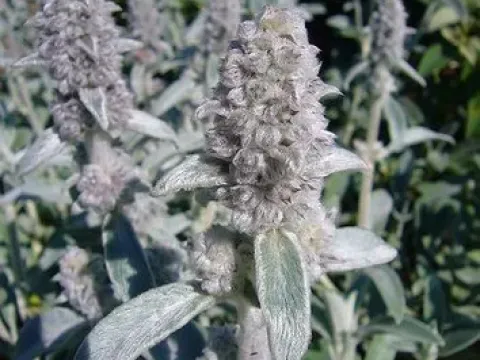
Snow betony
Stachys nivea
Propagating snow betony (Stachys nivea) is best achieved through autumn or early spring sowing, requiring a period of cold stratification for optimal germination. Seeds are tiny and require light to germinate, so they should be sown on the surface of a light, well-draining potting medium.
What the section contains
Snow betony
Indoor sowing in trays allows for better control of environmental factors, with an ideal temperature range of 15–18°C. Humidity must be kept consistent, but it is critical to avoid waterlogging the soil to prevent seed rot before they successfully establish their root systems.
Seedlings should be pricked out when the first true leaves appear, being careful not to damage the fragile roots. Moving them to individual pots ensures they develop a robust root ball before their final relocation to a permanent sunny location in the garden or field.
Vegetative propagation via clump division is a preferred method for established plants, especially for those wanting to maintain specific plant characteristics. This is ideally done in early autumn to allow the plants to establish new roots before the onset of the winter dormancy period.
When sowing directly into the field, ensure the site is free of weeds, as young seedlings of Stachys nivea grow slowly and can easily be outcompeted by more vigorous weeds. Using a protective mulch of fine grit around the base of young plants can also assist in moisture control.
Snow betony is a member of the Lamiaceae family, evolved to thrive in dry, rocky, and sun-exposed environments. This species prefers full sun exposure to maintain its dense, silvery-white foliage, which is its most striking ornamental feature for landscaping and xeriscaping.
Soil requirements are relatively specific: the medium must be highly porous, stony, or sandy with an alkaline to neutral pH. Heavy, clay-rich soils are entirely unsuitable as they retain too much moisture, which inevitably leads to root decay and the death of the plant during wetter periods.
Climate adaptability is a strong point for this species, as it is naturally cold-hardy and resistant to intense summer heat. However, it requires protection from excessive winter moisture, which is the primary factor limiting its survival in regions with rainy winters and frozen soil.
Watering should be kept to a minimum; established plants are highly drought-tolerant and rarely require supplementary irrigation unless during prolonged periods of extreme heat. Always aim to water the soil directly rather than the foliage to keep the plants dry and disease-free.
Fertilization should be handled with caution, as high nutrient levels lead to rapid, weak growth that ruins the plant's natural compact shape. A single application of a balanced, low-nitrogen fertilizer early in the spring is usually sufficient to support healthy foliage development.
Root and crown rots are the most significant threats to snow betony, almost always caused by poor soil drainage or excessive humidity. The best defense is to ensure the planting site is elevated or built on a slope to facilitate the rapid drainage of snowmelt and rain.
Powdery mildew can occasionally affect the leaves in humid, still-air conditions, showing as a white dusting. Ensuring proper spacing between plants to allow for airflow is the most effective preventative measure against this fungal pathogen in a nursery or field setting.
Aphids may occasionally cluster on the flower spikes, especially during warm spells in late spring. While not usually fatal, they can distort growth; manual removal or soft-soap sprays are typically enough to control an infestation without resorting to harsh chemical treatments.
Slugs and snails can consume young leaves, particularly in damp springs or in garden environments. Using copper tape, grit barriers, or organic-certified slug baits can prevent this damage, allowing the snow betony to retain its beautiful silvery-velvet appearance.
Regular sanitation, including the removal of dead leaves and spent flower stems, is crucial for plant health. By cleaning the base of the plant, you prevent the accumulation of moisture-trapping debris, which is a common breeding ground for pests and pathogens.