
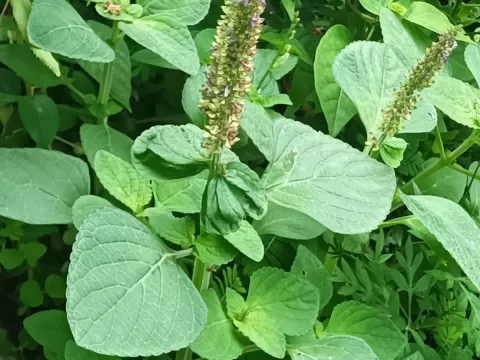
Solenostemon monostachyus
Solenostemon monostachyus
Sowing of Solenostemon monostachyus typically coincides with the beginning of the rainy season in its native tropical habitats. The timing is crucial to ensure that seedlings have sufficient moisture for establishment during their most vulnerable growth stage.
What the section contains
Solenostemon monostachyus
Seeds are generally small and require a prepared, fine seedbed to ensure proper contact with the soil. Starting plants in nurseries or seedling trays is a common practice to achieve higher germination rates and more uniform plant stands before field transplanting.
Optimal planting density is determined by the intended end use of the crop, such as biomass production or seed multiplication. Spacing must be carefully managed to allow for adequate airflow between plants, which is essential for disease prevention in humid climates.
Early maintenance involves keeping the field weed-free, as young plants are susceptible to competition for nutrients and sunlight. Providing consistent irrigation during the first few weeks is vital for successful root system development.
Integrating organic amendments into the soil before sowing significantly enhances the nutrient profile and water-retention capabilities. Adhering to crop rotation cycles helps maintain long-term soil fertility and minimizes pest build-up.
As a member of the Lamiaceae family, Solenostemon monostachyus thrives in warm, tropical conditions. It requires high light exposure for optimal vegetative development, though it can tolerate partial shade in areas with extreme solar intensity.
The plant prefers fertile, well-drained loamy soils with a slightly acidic to neutral pH. Proper soil structure is essential, as the plant does not tolerate waterlogging, which often leads to root rot and other physiological disorders.
Temperature stability is critical, with an ideal growth range between 22 and 30 degrees Celsius. The crop is highly sensitive to frost and sudden temperature drops, which can lead to significant yield losses or plant mortality.
Protection from strong winds is recommended to prevent mechanical damage to the succulent stems and leaves. Using natural windbreaks or intercropping with sturdier species can help provide a more stable microclimate for the plants.
Adequate soil moisture must be maintained throughout the growing season to ensure vigorous leaf production. Regular monitoring of the soil moisture status allows for precise irrigation management, preventing both drought stress and over-saturation.
The productivity of Solenostemon monostachyus depends heavily on soil management and consistent agricultural practices. Under favorable conditions, the plant is capable of producing multiple harvests of biomass within a single growing cycle.
Yield evaluation focuses on both the quantity of raw material and the chemical quality of the leaves. Harvesting at the peak of vegetative growth, before the onset of flowering, ensures that the concentration of desired plant metabolites is maximized.
Efficiency in production is enhanced by diligent weed control and proactive management of soil nutrient levels. Supplemental feeding during the growth phase can significantly increase the total biomass yield per hectare.
Depending on the cultivation strategy, growers can perform two or more cuts per season. Each harvest should be followed by a period of recovery with appropriate fertilization to support the regrowth of stems and leaves.
The quality of the final product relies on efficient post-harvest handling. Proper drying techniques are essential to preserve the integrity of essential oils and other medicinal compounds found in the foliage.
Fungal diseases, particularly those triggered by high humidity, are the primary threat to Solenostemon monostachyus. Leaf spot and root rot are common issues that require constant vigilance and effective field management to contain.
Pests like aphids and spider mites can infest the foliage, causing significant stress to the plants. Integrated pest management, focusing on biological controls and environmentally friendly treatments, is the preferred approach for sustainable farming.
Root-knot nematodes can pose a significant challenge, especially in soil that has been continuously used for the same crop. Planting certified clean seeds and maintaining healthy soil biology are key preventive measures.
Slugs and snails can damage young plants, especially during prolonged rainy periods. Setting physical barriers or using selective deterrents helps keep populations under control without impacting the local ecosystem.
Regular field scouting is essential to identify early signs of pathogen or pest activity. Early intervention with targeted control methods prevents large-scale outbreaks and ensures the longevity of the plantation.
Harvesting is ideally conducted during dry weather to facilitate faster drying and reduce the risk of spoilage. Utilizing mechanical tools or specialized manual techniques ensures the crop is collected efficiently and with minimal damage to the plant stock.
Immediately after harvest, the biomass should be transported to a drying facility. Keeping the material in cool, shaded, and well-ventilated conditions is crucial to prevent fermentation and the degradation of bioactive components.
Sorting the harvest allows for the removal of extraneous matter and damaged leaves, ensuring compliance with market standards. Quality control at this stage is vital for maximizing the value of the medicinal raw material.
Proper packaging, protecting the dry leaves from moisture and light, ensures shelf-life stability during storage and transport. High-quality packaging also prevents cross-contamination and maintains the potency of the product.
The remains from the harvest can be processed into organic compost, contributing to a sustainable cycle of nutrient replenishment on the farm. This practice fosters long-term environmental health and farm productivity.