
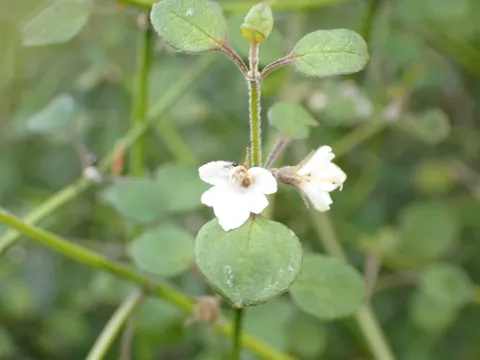
Small-leaved germander
Teucrium parvifolium
Small-leaved germander (Teucrium parvifolium) is a hardy perennial subshrub belonging to the Lamiaceae family. It is recognized for its dense, low-growing habit and aromatic foliage, making it a versatile plant for both rock gardens and wild-harvesting purposes.
What the section contains
Small-leaved germander
The origin of this species is linked to rocky and mountainous regions with Mediterranean-type climates. It thrives in well-drained, nutrient-poor, and alkaline soils, reflecting its evolutionary adaptation to harsh, high-exposure environments where water drainage is efficient.
In terms of agricultural requirements, the crop demands full sun exposure to maintain its compact morphology and stimulate the production of essential oils. It shows significant resistance to environmental stressors such as prolonged drought and nutrient deficiency.
Soil management should prioritize aeration. The species is highly sensitive to waterlogging; therefore, the cultivation field must have a porous structure, often achieved by adding grit or limestone chips to the substrate.
Economically, Teucrium parvifolium is valued as a drought-tolerant ornamental plant and a source of secondary metabolites. It provides essential nectar for pollinators and serves as a sustainable option for low-maintenance agricultural land restoration.
The primary threats to this plant are fungal infections caused by high atmospheric humidity and poor air circulation around the root zone.
Root rot and powdery mildew are the most common diseases that can rapidly destroy established stands if soil drainage is not properly managed during the rainy seasons.
Insect pests such as leaf beetles and aphids can cause damage during the active growing season, potentially reducing the yield of high-quality biomass.
Integrated pest management strategies are recommended, focusing on maintaining plant spacing and improving natural drainage to create conditions unfavorable for pests and pathogens.
Sanitation measures, including the removal of dead or rotting plant tissue, are essential practices to ensure the long-term health of the crop and minimize the need for external chemical inputs.