
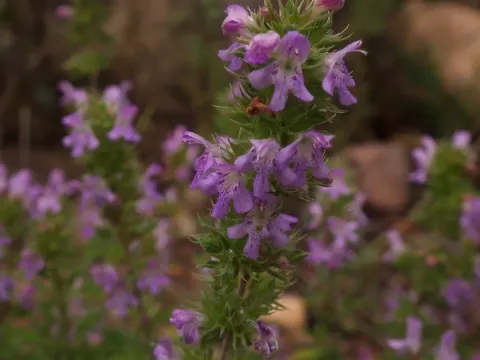
Unknown savory
Satureja innota
Sowing of Satureja innota seeds is recommended in early spring once soil temperatures reach a stable 10–12°C. The seeds are known for their slow germination rate, making early planting essential to utilize spring moisture effectively for early establishment.
What the section contains
Unknown savory
For large-scale cultivation, a row spacing of 45–60 centimeters is optimal. This configuration facilitates mechanized weeding and inter-row cultivation, which are critical for keeping the crop free of weeds during the early developmental stages.
The seeds are small and should be sown at a shallow depth of 0.5–1.0 centimeters. Following sowing, rolling the soil surface is a necessary practice to ensure optimal seed-to-soil contact and to promote uniform emergence across the field.
In regions with long growing seasons, summer sowing is possible provided that supplemental irrigation is available. Without adequate moisture, seedlings struggle to emerge, leading to poor plant density and reduced overall crop quality.
Once seedlings have reached sufficient height, thinning should be performed to maintain an intra-row spacing of 15–20 centimeters. This ensures that each plant has enough space to develop robust foliage and prevents competition for resources.
Unknown savory (Satureja innota) belongs to the Lamiaceae family and is a sun-loving species. High light intensity is crucial throughout the growing season to maximize the concentration of essential oils, which define the herb's market value.
The plant thrives in light, well-drained loamy or sandy soils with a neutral to slightly alkaline pH. Heavy, waterlogged clay soils should be avoided as they inhibit root development and increase the risk of disease.
While Satureja innota possesses good drought tolerance, regular irrigation during dry spells can significantly increase the total biomass and ensure consistent growth. Water management is key to achieving optimal harvest volumes.
The optimal temperature range for active growth is between 18–25°C. Excessive cold or prolonged humidity can stunt growth and promote fungal issues, making site selection based on climate a primary consideration for farmers.
In a crop rotation scheme, savory performs best following cereals or row crops that help keep the field clean. Excess nitrogen fertilization should be avoided as it can lower the essential oil quality and reduce the overall aromatic intensity of the herb.
The yield of unknown savory depends heavily on the plantation age and the level of agricultural management. Under favorable conditions and proper cultivation, producers can expect to harvest between 15 and 25 quintals of dry material per hectare.
Peak productivity is typically reached in the second and third years of cultivation. In the first year, plants invest most of their energy into establishing a deep root system, which is vital for the long-term survival of the perennial stand.
Micronutrient application during the budding phase can effectively boost yields. This practice promotes branching and increases the number of harvestable shoots, directly contributing to a higher volume of harvested greenery.
A key biological advantage of Satureja innota is its capacity for rapid regrowth after harvesting. With sufficient irrigation and suitable climate conditions, farmers may conduct two full harvests during a single growing season.
Economic success is highly dependent on the quality of post-harvest processing. Efficient drying techniques that preserve the volatile essential oils are essential to maintaining the high market value of the dried product.
The primary threats to unknown savory include fungal diseases, particularly in high-humidity environments. Root rot can cause significant stand loss if the soil does not provide adequate drainage during rainy periods.
Powdery mildew is a common issue when plants are grown too densely or lack proper air circulation. Maintaining proper spacing and removing infested plant debris are the most effective preventive measures against such outbreaks.
Pests like aphids and spider mites can infest young shoots, feeding on the sap and potentially causing stunted growth or leaf deformation. These pests often appear when the plant is stressed by improper watering or over-fertilization.
Integrated pest management strategies are recommended over chemical intervention. Since the crop is intended for food use, reliance on biological controls and strict adherence to crop rotation helps minimize the risk of recurring pest problems.
Prevention is the foundation of successful savory cultivation. Monitoring the field for early signs of disease and ensuring optimal soil conditions are the most cost-effective ways to manage potential threats without intensive chemical usage.
The harvest of Satureja innota should ideally occur during the full flowering phase, as this is when the concentration of essential oils and aromatic compounds in the plant is at its absolute peak.
Using specialized machinery or manual scythes, the crop should be cut at a height of 10–15 centimeters above the soil level. Cutting too low can damage the plant crown, hindering its ability to overwinter or regrow in the subsequent season.
Harvested material must be transported to the processing facility immediately. Keeping the cut crop in the field under direct sun can cause rapid degradation of quality and the evaporation of valuable aromatic oils.
Drying should be performed in a shaded, well-ventilated space or in industrial dryers at temperatures ranging from 35–40°C. Controlling the temperature is vital to preserving the vibrant color and scent of the finished herb.
Once dried, the product is threshed to separate the valuable leaves and flowers from the stalks. The final herb should be stored in airtight containers to maintain freshness and protect it from moisture and sunlight during distribution.