
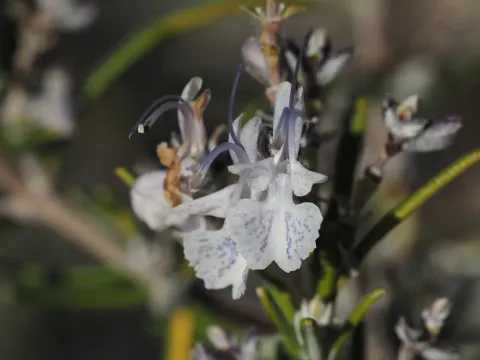
Rosemary
Salvia rosmarinus
Rosemary (Salvia rosmarinus) is an evergreen perennial shrub belonging to the Lamiaceae family. It is commercially propagated through seeds, cuttings, or division of mature plants.
What the section contains
Rosemary
Seeds are typically started indoors in late winter. Germination is slow and can take up to a month, requiring a warm environment and a lightweight, well-draining sowing substrate.
Cuttings are the preferred method for maintaining varietal characteristics. Shoots 10–15 cm long are taken from healthy plants and rooted in sand or perlite under high humidity conditions.
Transplanting into the field is carried out once the risk of frost has passed. Spacing is crucial for the crop's health, typically requiring 40–50 cm between plants to allow for airflow.
During the first year, rosemary exhibits slow development. Weed control is essential during this establishment phase to ensure the young plants are not choked by faster-growing vegetation.
Rosemary thrives in full sunlight. Choosing a site with at least six to eight hours of direct exposure is vital for the development of aromatic essential oils and structural strength.
The soil must be well-drained, sandy, or loamy, with a neutral to slightly alkaline pH. Excessive soil moisture is the primary cause of plant death, as it leads to root rot.
In terms of climate, rosemary prefers warm, temperate conditions. While it is quite drought-tolerant once established, it is sensitive to severe frost and requires protection in colder regions.
Watering should be deep but infrequent, allowing the soil to dry out between applications. Excessive irrigation is more damaging than drought, as it weakens the plant's resistance.
Regular pruning is a fundamental part of rosemary management. It encourages bushy growth, removes dead wood, and ensures the plant remains productive and vibrant throughout the season.
The yield of rosemary increases significantly from the second year onwards. A well-managed plantation can provide several harvests per year depending on the local climate and growing cycle.
Commercial yields can range from 2 to 5 tonnes of fresh herb per hectare. The quality of the crop is measured by the essential oil content, which is determined by the harvest timing.
Rosemary is highly valued in the food industry as a culinary spice. It is also used extensively in the pharmaceutical and food preservation industries for its antioxidant properties.
The cosmetic industry utilizes rosemary oil for its fragrance and skin-conditioning benefits. It is a staple ingredient in luxury soaps, shampoos, and lotions globally.
To sustain high yields, farmers implement a systematic rotation and rejuvenation plan, ensuring that the older plants are replaced to maintain the overall productivity of the fields.
Downy mildew is a major disease affecting rosemary in humid environments. It appears as discolored patches on the foliage and can lead to rapid deterioration of the plant's health.
Root rot, typically caused by Phytophthora, is a consequence of poor drainage. It presents as wilting and browning, even when the soil appears moist to the touch.
Spider mites are the most troublesome pests, particularly in hot, dry weather. They feed on the sap, causing foliage to yellow and drop if the infestation remains uncontrolled.
Aphids and scale insects can also infest the plants, weakening them and potentially spreading viral pathogens. Integrated pest management strategies are advised to minimize chemical use.
- Implement proper soil drainage
- Monitor for early pest signs
- Ensure correct plant spacing
- Avoid overhead irrigation
- Use disease-free planting stock
Harvesting is best timed for the start of the flowering phase. This is when the plant's essential oil concentration is at its peak, ensuring the highest flavor and aromatic quality.
When cutting the stems, it is important to remove no more than one-third of the plant's current growth. This preserves the plant's vitality and ensures rapid regrowth for subsequent cycles.
The collected herb must be dried in a shaded, well-ventilated location. Rapid drying protects the essential oils from oxidizing and preserves the plant's vibrant green color.
Drying temperatures must be kept below 40 degrees Celsius. Exposure to high heat will cause the volatile oils to evaporate, significantly degrading the quality of the commercial product.
Properly dried rosemary should be stored in opaque, airtight containers. This protects the herb from light and moisture, maintaining its potency for commercial and domestic use.