
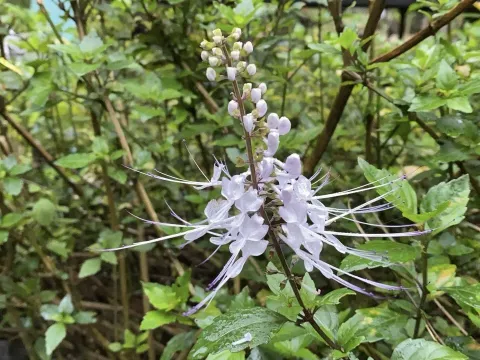
Orthosiphon stamineus
Orthosiphon Benth.
Orthosiphon stamineus is a perennial heat-loving subshrub, primarily cultivated as an annual in temperate zones. Propagation is typically achieved through stem cuttings, as the seeds often exhibit low germination rates and require specific environmental conditions to sprout successfully.
What the section contains
Orthosiphon stamineus
For seedling production, cuttings are planted in greenhouses or nurseries during March, maintaining temperatures above 20-22 degrees Celsius. Maintaining high humidity and adequate ventilation in the nursery environment is essential to ensure robust root development.
Transplanting into the open field occurs once the risk of spring frost has completely passed and soil temperatures have stabilized at approximately 15 degrees Celsius. In subtropical climates, direct sowing in early spring is possible given sufficient soil moisture.
A wide-row planting scheme, with spacing between rows of 60-70 centimeters, is recommended. This layout facilitates mechanical maintenance and ensures each plant receives sufficient light and nutrients for optimal biomass accumulation.
Young plants are sensitive to temperature fluctuations during the initial establishment phase. Using temporary row covers or protective films during the first few weeks after transplanting helps mitigate environmental stress and ensures a uniform crop stand.
Belonging to the Lamiaceae family, this crop requires warm conditions throughout its growing season. Optimal vegetative growth is observed when temperatures are consistently maintained between 25 and 30 degrees Celsius.
The soil should be light, well-aerated, and rich in organic matter. Fertile loamy soils with a neutral or slightly acidic pH provide the most suitable environment for high yields of vegetative material.
Orthosiphon is highly moisture-demanding and requires regular irrigation, particularly during the peak growth stages. Drought stress significantly impairs the synthesis of bioactive compounds and slows down overall plant development.
Intensive sunlight is critical for the development of flavonoids and essential oils within the leaves. Shading can lead to leggy growth and a substantial decrease in the quality and efficacy of the final medicinal product.
Regular fertilization with nitrogen and potassium is necessary to sustain growth throughout the season. However, nitrogen management must be balanced to avoid excessive leafy growth at the expense of active ingredient concentration.
Yield is determined by the number of harvests possible within a single growing season. With proper management and frequent irrigation, growers can perform three to four cuttings of apical shoots, which constitute the primary commercial product.
Industrial yields of dried material typically range from 1 to 2 tons per hectare, depending on local climate conditions and agronomic practices. Scheduling harvests in alignment with the plant's biological cycle is critical for yield optimization.
The concentration of beneficial compounds peaks during the mass flowering phase. Therefore, harvest timing should be precisely coordinated with this biological stage to ensure that the produced material meets high medicinal standards.
Modern growth regulators and regular tip pruning encourage branching, which directly increases the leaf surface area and results in higher overall biomass. Agronomic interventions that stimulate lateral growth are vital for maximizing farm productivity.
Post-harvest recovery requires immediate irrigation and fertilization to replenish nutrients. This ensures the plant quickly regenerates, maintaining high levels of productivity across the entire season for multiple harvesting cycles.
The primary phytosanitary risk for Orthosiphon is excessive soil moisture, which predisposes the crop to root rot. Good drainage is essential, as waterlogging can lead to plant death within a very short timeframe due to hypoxic stress.
Pests such as aphids and spider mites are common, especially in warm climates or protected environments. These pests feed on the sap of young leaves, leading to stunted growth, leaf deformation, and potentially facilitating viral infections.
Thrips can also damage flower buds and inflorescences, which diminishes the aesthetic and medicinal value of the crop. Weekly monitoring programs are recommended to detect and manage pest outbreaks before they reach critical economic thresholds.
Preventative strategies include strict adherence to crop rotation and avoiding dense planting patterns. Good ventilation between plants reduces the humidity levels that favor the spread of fungal pathogens and pests.
Biological pest control methods are preferred over chemical pesticides. Given that this crop is used for medicinal teas and extracts, strict safety standards regarding residue management must be maintained at all times.
Harvesting involves cutting the upper 20-25 centimeters of the shoots, which contain the valuable leaves and flowers. Using sharp, sanitized tools is imperative to minimize mechanical injury to the stems and prevent the entry of pathogens into the cut site.
Drying must commence immediately after harvest to prevent oxidation and enzymatic fermentation. The material should be dried in specialized equipment at temperatures between 40 and 50 degrees Celsius to preserve the chemical integrity of the active ingredients.
High-quality dried material should retain its distinct aroma and greenish color. Any deviation from the recommended drying protocol can result in leaf browning and a loss of medicinal potency, severely impacting market value.
Storage should be conducted in dry, dark, and well-ventilated conditions with low relative humidity. Hermetic packaging is essential to prevent the loss of volatile essential oils, ensuring a shelf life of up to three years under proper conditions.
Post-drying, the material undergoes sorting to remove woody stem segments and impurities. Strict adherence to these quality control standards ensures the product meets the requirements of the pharmaceutical industry and consumers.