
Parnassus savory
Satureja parnassica
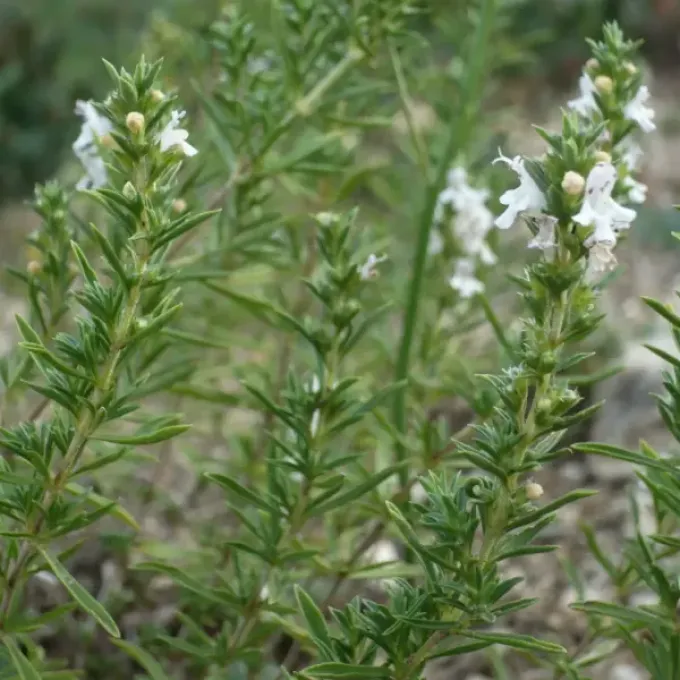
Description
Sowing dates
Parnassus savory is a perennial subshrub, typically propagated by seeds sown in early spring once the soil temperature consistently reaches 10–12 degrees Celsius.
For greenhouse cultivation, seeds are sown in trays in March, which allows for the development of robust seedlings suitable for transplanting into open ground.
When seeding directly into the field, ensure that the seeds are placed at a shallow depth of approximately 0.5 centimeters, as they require light to germinate effectively.
Regular but moderate irrigation is essential during the germination period to prevent the small seeds from drying out in the top layer of the soil substrate.
Vegetative propagation, including division of mature clumps or cuttings, is often preferred by commercial growers to maintain the specific aromatic profile of the plants.
Growing requirements
Belonging to the Lamiaceae family, this crop thrives in areas with full sun exposure, which is critical for maximizing the synthesis of essential oils in the foliage.
The ideal soil conditions are light, well-draining, and slightly calcareous; the species does not tolerate waterlogged conditions or heavy, compacted clay soils.
Naturally adapted to the mountainous terrain of Greece, Parnassus savory exhibits excellent drought tolerance, making it suitable for Mediterranean-type climates.
Protection from severe, cold winter winds is recommended to ensure the plant's longevity, especially in regions with fluctuating temperatures during the dormant season.
- Optimal growth occurs at temperatures between 20–25 degrees Celsius.
- Neutral to slightly alkaline soil pH is preferred for nutrient uptake.
- Frequent weeding is necessary during the establishment phase.
Yield
The yield of Parnassus savory peaks during the second and third years of growth, as the plant establishes a dense, productive root system and sprawling branches.
Commercial plantations can produce between 1.5 and 3 tons of dried biomass per hectare, depending on planting density and the quality of agricultural management.
Harvest timing is critical for essential oil yield; harvesting during the peak flowering stage ensures the highest concentration of active aromatic compounds.
Strategic fertilization with phosphorus and potassium can enhance flower production and improve the overall phytochemical profile of the harvested biomass.
Proper harvest cycles prevent the exhaustion of the plant, allowing for multiple years of sustainable production before the old stocks need to be replaced.
Main diseases and pests
Fungal pathogens, particularly those causing root rot, are the primary threat to this crop, especially in environments with poor soil drainage and high humidity levels.
Pests such as aphids and spider mites can infest the soft tips of the shoots, causing stunted growth and reducing the market quality of the aromatic herb.
Adequate spacing between rows is essential to promote air circulation, which naturally reduces the risk of fungal infections and moisture accumulation around the base.
Integrated pest management, focusing on biological control and preventative measures, is preferred to avoid the use of harsh chemicals that could taint the herbs.
Maintaining a clean, weed-free environment is vital, as weeds often act as hosts for common garden pests that eventually migrate to the savory crop.
Harvesting
The harvest should commence when the plant enters the early flowering stage, as this is when the secondary metabolites and oils are most abundant.
Using sharp shears, the apical parts of the shoots are harvested, ensuring that enough vegetative growth remains for the plant to recover and photosynthesize effectively.
Post-harvest processing involves immediate transport to a shaded area to prevent the rapid evaporation of volatile essential oils caused by direct sunlight.
Drying is performed at controlled temperatures not exceeding 40 degrees Celsius to preserve the delicate aromatic compounds and the natural color of the leaves.
Final storage must be in airtight containers, away from direct light and moisture, to maintain the product's premium quality for culinary or medicinal use.