
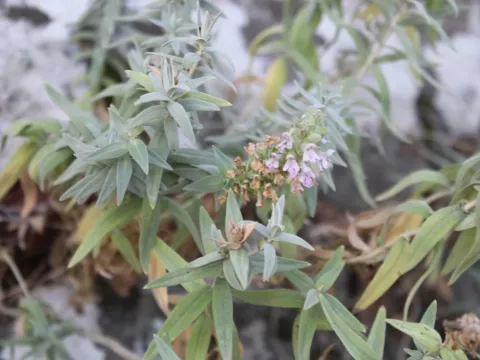
Palestinian woundwort
Stachys palaestina
Palestinian woundwort (Stachys palaestina) is a perennial herbaceous plant belonging to the Lamiaceae family. Native to the Eastern Mediterranean, it is well-adapted to semi-arid climates and rocky environments.
What the section contains
Palestinian woundwort
This crop thrives in full sunlight, requiring at least six to eight hours of direct exposure daily. It is highly resistant to drought, making it an excellent candidate for regions with scarce water resources.
Regarding soil requirements, Stachys palaestina demands excellent drainage. It performs best in alkaline or neutral soils, often growing naturally in calcareous substrates where other plants struggle.
Temperature management is straightforward, as the plant withstands high heat. However, it requires a period of dormancy during the cooler months to reset its biological cycle for the next season.
Minimal fertilization is usually sufficient for this species. Over-fertilization, especially with nitrogen, can lead to leggy growth and reduced concentration of aromatic compounds in the leaves.
Root rot is the primary threat to this crop, typically caused by waterlogged soil conditions. Ensuring proper drainage is the most effective preventative measure for farmers.
Pests such as spider mites and various aphids can infest the plants during prolonged dry spells. Integrated pest management (IPM) strategies are recommended to maintain plant health.
Fungal leaf spots may occur if air circulation is poor, particularly in dense cultivation beds. Proper plant spacing is essential to keep the foliage dry and healthy.
Weeds can be a significant competitor during the plant's early establishment phase. Manual weeding or light mechanical cultivation is recommended until the crop forms a dense canopy.
Monitoring the soil moisture levels is vital, as the plant is susceptible to crown rot if moisture accumulates around the base of the stem during the winter season.