
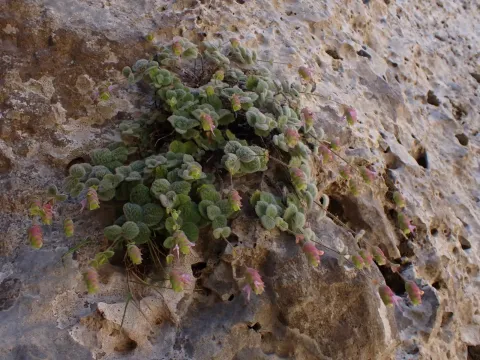
Origanum dictamnus
Origanum dictamnus
Origanum dictamnus, commonly known as Cretan dittany, is a perennial subshrub belonging to the Lamiaceae family. The propagation process usually begins with sowing seeds in controlled greenhouse conditions during late winter to early spring.
What the section contains
Origanum dictamnus
Seeds are tiny and require surface sowing on a light, well-draining seed-starting mix. They are light-dependent for germination, so they should not be covered with a thick layer of substrate. A temperature range of 18–22 degrees Celsius is ideal for uniform germination.
Once seedlings develop at least two sets of true leaves, they are pricked out into individual pots to avoid root competition. Transplantation to the field occurs once all risk of frost has passed and the ground temperature has consistently risen.
For field cultivation, plants should be spaced approximately 40–50 centimeters apart. Proper spacing is essential to ensure adequate airflow, which is a critical factor in preventing moisture-related plant diseases throughout the growing season.
Vegetative propagation via cuttings is also highly efficient for maintaining clone consistency. Cuttings are taken from young, non-flowering shoots during the summer months and placed in a humid environment to promote root development.
Origanum dictamnus has very specific ecological requirements, mirroring its natural habitat on the rocky cliffs of Crete. It is a highly heliophilic plant that demands full sun exposure to thrive and develop its characteristic aroma and essential oils.
The soil profile must be rocky, poor in nutrients, and have exceptional drainage. Heavy or waterlogged soils are detrimental to the plant, quickly causing root rot and leading to total crop failure. Adding grit or sand to the planting holes can improve drainage.
The species is remarkably drought-tolerant once established. Irrigation should be sparse and only provided when the soil is completely dry. Overwatering is the most common cause of failure in agricultural settings for this specific herb.
Temperatures between 20 and 30 degrees Celsius promote the most vigorous vegetative growth. In regions with harsh winters or high rainfall, the plant must be cultivated in pots and moved to a sheltered area to prevent frost damage and water accumulation.
Wind exposure is generally beneficial as it helps dry the foliage and prevent the development of fungal spores. However, in extreme environments, young plants may require a temporary windbreak to prevent physical damage while they become established.
The agricultural yield of Origanum dictamnus is measured by the biomass of leaves and flowering stems collected for pharmacological and culinary use. Peak productivity is achieved from the second year after planting.
Harvesting is concentrated on the flowering phase, as the concentration of volatile essential oils reaches its maximum at the onset of blooming. Consistent pruning of flower heads can encourage a denser vegetative habit and multiple harvest cycles.
Because the plant is prized for its medicinal properties, quality control is paramount. The yield is typically lower compared to other Origanum species, placing it in a specialized niche market with significant economic potential for small-scale herb farmers.
Yield management requires careful handling. Post-harvest, the material must be processed immediately to prevent degradation of the active compounds. Efficiency in harvesting is achieved through organized manual labor, ensuring the preservation of the delicate plant parts.
Farmers focused on high-quality production prioritize essential oil content over sheer volume. By managing soil nutrient levels carefully, growers can influence the secondary metabolite production, resulting in a premium final product.
Fungal pathogens are the primary threat to Origanum dictamnus, particularly in humid climates. Root rot and collar rot are frequently observed when soil drainage is insufficient or when plants are spaced too closely together.
Proper sanitation practices are crucial. This includes clearing debris from the base of the plant and ensuring that surrounding soil is free of weeds that could harbor pathogens or retain excess moisture near the stems.
Pests such as aphids and spider mites can infest the plant, especially in protected greenhouse environments. Integrated pest management strategies, focusing on biological controls and predatory insects, are preferred over chemical pesticides.
Maintaining a balanced ecosystem around the plantation helps in suppressing pest populations naturally. Avoid using synthetic fungicides, as they can alter the chemical composition of the plant and affect its therapeutic qualities.
Disease prevention also involves selecting resistant genetic stock and rotating crops to avoid planting in soil that has previously hosted other Lamiaceae species, which may share common soil-borne pathogens.
The harvest window begins when the first buds appear but before they are fully open. This specific timing ensures that the plant has not yet diverted its resources into seed production, keeping the aromatic oil content high.
Harvesting should be performed during the early morning hours, once any dew has evaporated but before the heat of the sun accelerates the volatilization of essential oils. Sharp, disinfected tools must be used to make clean cuts.
Stems should be cut roughly 10–15 centimeters above the soil line. This pruning method leaves sufficient foliage to allow the plant to recover and photosynthesize effectively for the remainder of the season.
Drying must be conducted in the shade with consistent airflow. Temperatures must not exceed 35 degrees Celsius; otherwise, the delicate chemical balance of the herb will be compromised, leading to a loss of quality.
Once dried, the product should be stored in airtight containers away from light and heat. When properly processed and stored, the medicinal properties and distinct aroma of Origanum dictamnus remain stable for an extended period.