
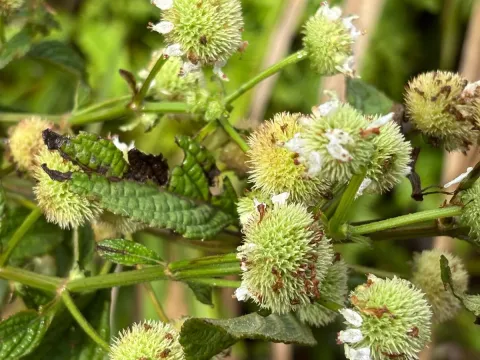
Hyptis rhomboidea
Hyptis rhomboidea
Hyptis rhomboidea is a warmth-loving crop that requires specific timing for sowing to ensure successful germination. It is best to plant seeds when the soil temperature consistently reaches at least 20–22 degrees Celsius, which typically corresponds with the onset of the wet season in its native habitat.
What the section contains
Hyptis rhomboidea
The seeds are relatively small and require a shallow sowing depth of approximately 1 to 2 centimeters. This depth provides the necessary balance between moisture retention and the physical ability of the seedling to emerge through the soil surface without depleting its energy reserves.
Row spacing should be carefully planned based on the intended final use of the crop. For leafy green production, rows spaced 30 centimeters apart allow for dense canopy development, while seed production plots require up to 60 centimeters between rows to ensure proper airflow and light penetration.
Seedbed preparation is crucial; the soil should be finely tilled and free of large clumps to facilitate uniform emergence. In areas with high rainfall, creating raised beds can help prevent waterlogging, which is a major risk factor for seed rot during the early stages of establishment.
Successive sowing can be practiced in regions with long growing seasons to stagger the harvest. However, one must account for the plant's high capacity for self-seeding, which can turn volunteer seedlings into weeds in subsequent seasons if not managed properly during the rotation cycle.
Belonging to the Lamiaceae family, Hyptis rhomboidea thrives in environments with high light intensity. It is essential to select sites with full sun exposure, as partial shade significantly reduces the development of essential oils and overall biomass production.
The crop prefers well-drained, fertile, sandy loam soils with a slightly acidic to neutral pH. While it exhibits moderate drought tolerance once established, consistent moisture during the vegetative phase is critical to achieving high yields and quality plant material.
Temperature management is key to successful cultivation. The plant does not tolerate frost, and even temperatures slightly above freezing can severely damage its physiological processes, causing defoliation and a drastic drop in growth rates.
Fertilization should be balanced; nitrogen is beneficial for leaf development, while phosphorus and potassium are essential for root health and reproductive development. Excessive nitrogen application should be avoided, as it can make the plant more succulent and attractive to chewing pests.
Aeration of the root zone is equally important. In compact soils, the roots tend to develop shallowly, making the plants more vulnerable to environmental stress. Regular shallow cultivation between rows helps improve oxygen availability to the rhizosphere and inhibits competitive weed growth.
Pest management is a fundamental aspect of Hyptis rhomboidea cultivation. The most common threats include aphids, whiteflies, and spider mites, which can cause significant damage by feeding on the sap, leading to leaf distortion and reduced photosynthetic capacity.
Fungal pathogens such as powdery mildew and various root rots pose a constant threat, particularly in environments with high humidity or poor air circulation. Proper plant spacing and avoiding overhead irrigation during humid weather are essential preventive strategies.
Weed control is particularly critical during the first four to six weeks of the crop's life cycle. Because the seedlings grow relatively slowly initially, they are easily outcompeted by aggressive weeds, requiring manual or mechanical intervention to maintain a clean field.
Integrated Pest Management (IPM) practices are recommended for this crop. Encouraging natural predators like ladybugs and lacewings can provide effective control against aphid populations, reducing the need for chemical intervention, which is particularly important for medicinal herb production.
Monitoring for viral infections is also necessary. Symptoms such as mosaic patterns or stunting on foliage often indicate the presence of plant viruses, which are frequently transmitted by insect vectors. Prompt removal and destruction of infected plants can prevent the spread of the virus across the field.