
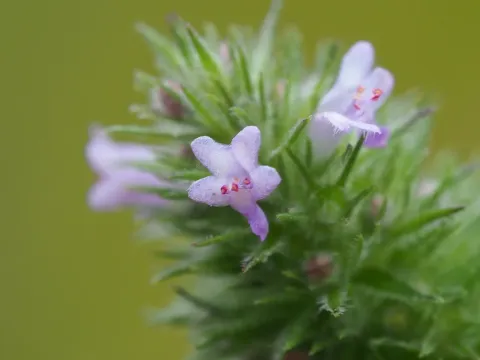
Hyptis spicigera
Hyptis spicigera
The sowing of Hyptis spicigera typically coincides with the beginning of the rainy season to ensure sufficient moisture for seed germination and initial establishment. In tropical climates, this is generally during the late spring or early summer months.
What the section contains
Hyptis spicigera
The soil preparation process involves deep plowing and harrowing to achieve a fine tilth. Because the seeds are tiny, they must be sown at a shallow depth of approximately 1 to 2 centimeters to ensure successful emergence.
Row spacing is usually maintained between 30 and 45 centimeters to provide adequate space for vegetative growth. Proper spacing is essential to reduce plant competition for nutrients and sunlight during the critical early development phases.
Uniform distribution of seeds is vital for a consistent plant stand. Farmers often use precise drilling equipment to avoid overcrowding, which helps in maintaining air circulation throughout the crop canopy as the plants mature.
In regions with fluctuating rainfall, initial irrigation after sowing is highly recommended to stimulate germination. This proactive approach significantly reduces the risk of gaps in the field that could lead to weed infestation.
Hyptis spicigera is a member of the Lamiaceae family, well-adapted to warm and sunny tropical environments. It thrives in conditions with high solar radiation and consistent daytime temperatures between 25 and 30 degrees Celsius.
The crop is highly adaptable to various soil types, but it performs best in well-drained, sandy loam soils. It is particularly sensitive to waterlogging, which can rapidly lead to root decay and crop failure in poorly drained areas.
While the plant exhibits moderate drought tolerance, adequate moisture during the flowering and seed-setting stages is necessary for high yields. Rainfall or supplementary irrigation in the range of 800 to 1200 mm is generally sufficient.
Light levels are crucial for the development of flowers; therefore, the crop should be planted in open, unshaded areas. Excessive shade can lead to elongated, weak stems and a significant drop in seed production.
Soil nutrient management, particularly the application of balanced NPK fertilizers, helps the crop establish a vigorous root system. Phosphorus and potassium are especially important for ensuring high-quality oil content in the seeds.
The yield of Hyptis spicigera varies depending on agricultural practices and local fertility. Under managed conditions, an average yield of 800 to 1500 kilograms of seeds per hectare is typically expected by commercial growers.
Weed control is the most significant factor affecting total productivity. Since the crop has a relatively slow growth rate initially, keeping the field free of competing species during the first month is critical for success.
Seed quality and oil content make this crop economically valuable. By selecting high-yielding varieties and using proper harvest timing, growers can significantly improve the profitability of their agricultural operations.
Hyptis spicigera is also recognized for its role in soil health improvement. Its deep root architecture aids in breaking up compacted soil layers, making it a beneficial crop in rotation systems for long-term land productivity.
Continuous research and breeding programs focus on increasing seed mass and oil quality, aiming to make this crop a more reliable and competitive option for farmers in subtropical and tropical regions worldwide.
Common pests include various beetles that feed on the inflorescences and stems of the plant. Monitoring and early intervention are essential to prevent these insects from damaging the developing reproductive organs.
Fungal diseases, such as leaf spots, are more prevalent in humid environments with poor air circulation. Proper spacing and selecting fields with good natural drainage are the most effective preventative strategies against these pathogens.
Aphids can cause significant damage by sucking plant sap and transmitting viral diseases. Integrated pest management, which includes encouraging natural predators like ladybugs, is highly recommended to manage these infestations.
Root-knot nematodes can occasionally pose a threat in intensive cropping systems. Rotating Hyptis with non-host crops is a standard practice to keep nematode populations below economic damage thresholds.
The use of botanical or biological pesticides is often preferred over synthetic chemicals to maintain the ecological balance of the farmland and ensure the safety of the oil produced for downstream applications.
Harvesting is performed when the inflorescences turn a dark brown color and the seeds reach a moisture content of around 10–12 percent. This timing is critical to prevent the natural shattering of seeds before collection.
Mechanical harvesting with modified combines or manual cutting is standard. When using manual methods, workers often use tarps to catch seeds that fall during the transport of harvested material to the drying area.
Post-harvest drying is essential to maintain the oil quality. Storing the crop in a well-ventilated, moisture-free facility helps prevent the buildup of mold and preserves the viability of the seeds for future sowing or extraction.
Cleaning and winnowing are the final steps to remove debris and impurities from the harvested seeds. High-purity seeds are much less prone to heating and degradation during long-term storage in warehouses.
Efficient supply chain management, ensuring quick transport to storage or processing facilities, is key to minimizing post-harvest losses and ensuring the highest possible quality of the final vegetable oil product.