
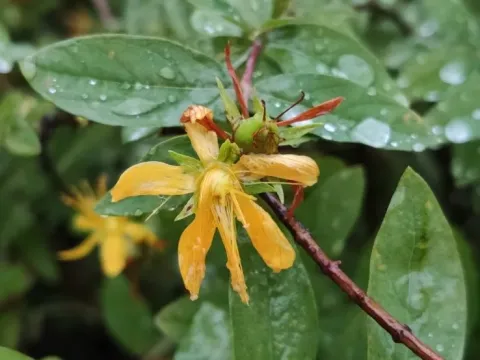
Honeysuckle-leaved St. John's wort
Hypericum xylosteifolium
Hypericum xylosteifolium, commonly known as the Honeysuckle-leaved St. John's wort, is an ornamental shrub belonging to the Hypericaceae family. It is native to the Caucasus and Turkey, typically found in mountainous terrain and forest fringes.
What the section contains
Honeysuckle-leaved St. John's wort
The plant thrives in fertile, well-drained soils with a slightly acidic to neutral pH. Providing adequate drainage is crucial, as the roots are sensitive to waterlogging, which can lead to rapid decay during wet dormant seasons.
In terms of light, this shrub prefers full sun to partial shade. While it is adaptable, the most prolific blooming occurs when the plant receives at least six hours of direct sunlight daily. It is relatively cold-hardy, though young specimens benefit from winter protection in harsh climates.
Agricultural maintenance involves consistent irrigation during dry spells and annual pruning in early spring. Pruning helps to maintain the shrub's shape, removes dead wood, and encourages new growth that produces more flowers during the summer season.
The primary use of Hypericum xylosteifolium is ornamental. Its distinct foliage, which resembles that of honeysuckle, combined with yellow flowers, makes it an excellent choice for garden borders, mass plantings, or as a foundational shrub in landscape architecture.
The main pathological threats include fungal diseases such as rust and leaf spots. These are most prevalent in damp, stagnant environments, making proper plant spacing and airflow essential components of a successful maintenance program.
Insect pests such as aphids and spider mites can infest the foliage, particularly during extended heatwaves. Monitoring the underside of the leaves is critical for early detection and mitigation of these pests before they cause significant stress to the plant.
In case of severe fungal infection, it is recommended to apply copper-based fungicides. Always ensure that the chemical application is performed according to the manufacturer's instructions and avoiding the hottest parts of the day.
Culturally, keeping the base of the plant clear of leaf litter reduces the risk of overwintering pathogens. Proper nutritional balance, focusing on phosphorus and potassium, helps the shrub withstand environmental stress and prevents pest susceptibility.
- Regular sanitation pruning.
- Fungicide applications for rust.
- Integrated pest management for mites.