
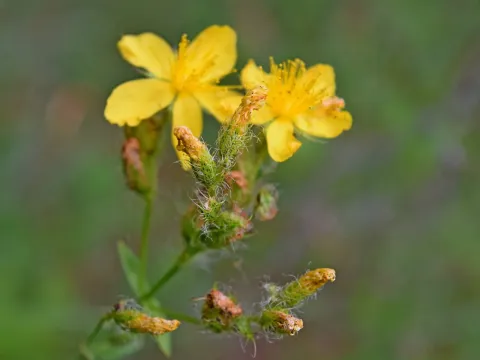
Bearded St. John's wort
Hypericum barbatum
Sowing of Bearded St. John's wort is best performed in early spring as soon as the soil warms up. Autumn sowing is also an option, as it allows seeds to undergo natural stratification, which often improves germination rates in the field.
What the section contains
Bearded St. John's wort
Due to the extremely small size of the seeds, they should be sown at a shallow depth of approximately 0.5 to 1 cm. Preparing a fine, level, and weed-free seedbed is essential to ensure that these tiny seeds receive sufficient contact with the soil.
In professional agriculture, a row planting method is utilized with row spacing of 45 to 60 cm. This layout facilitates mechanical inter-row cultivation and helps maintain the health of the developing plant population.
Light compaction of the soil surface immediately after sowing helps retain moisture and encourages consistent germination. Care must be taken to prevent the soil from drying out during the initial weeks of seedling establishment.
As a member of the Hypericaceae family, this species displays a slow initial growth rate. During its first year, the plant focuses on establishing a robust root system and a basal leaf rosette, setting the stage for more vigorous growth in subsequent years.
Bearded St. John's wort is a light-demanding crop that flourishes in open, sunny locations. Full sun exposure is critical to ensure high concentrations of the secondary metabolites that make the plant valuable for its medicinal properties.
The plant performs best in well-drained loamy or sandy soils with a neutral to slightly acidic pH. Avoiding waterlogged areas is paramount, as poor drainage is one of the most common causes of root system failure in this crop.
This species is notably drought-tolerant once established, thanks to its deep taproot system. However, maintaining consistent soil moisture during the active growth phase is recommended to maximize biomass yield per hectare.
Effective crop rotation is a cornerstone of successful cultivation. Planting after grain or hoeing crops helps manage weed pressure, which is particularly vital during the slow-growing initial phases of the plant's life.
Agricultural management should include periodic inter-row hoeing to prevent soil crusting and eliminate competing vegetation. Keeping the field clear of weeds is essential for both the quantity and quality of the harvested medicinal material.
Fungal diseases, including leaf spot and root rot, represent the primary threats to crop health. These diseases are most common in regions with high humidity or in fields with poor soil drainage, necessitating careful management.
Insect pests, specifically those targeting the buds and flowers, can reduce the quality of the harvested material. Regular monitoring of the field during the floral initiation stage is necessary to determine if intervention is needed.
Aphids can also colonize the plant, particularly in sheltered or poorly ventilated areas. Their presence can stunt growth and attract secondary issues, so proactive scouting and biological control methods are highly recommended.
Rust diseases may occur during wet, cool periods, causing discolored patches on the foliage. While these rarely destroy a crop, they do reduce the overall vigor and aesthetic quality of the final dried product.
Implementing an integrated pest management strategy that prioritizes crop rotation and optimal spacing is the most effective way to minimize the need for chemical inputs throughout the growing season.
The optimal harvest time for Bearded St. John's wort is during the peak flowering stage, when the secondary metabolites in the aerial parts are at their highest concentration. This is the window that provides maximum product quality.
Harvest involves cutting the top 20–25 cm of the flowering stems. Modern harvesting equipment is often used to ensure efficiency, allowing for large-scale production while maintaining the uniformity of the cut material.
Post-harvest processing must be swift to prevent heat buildup and oxidative loss of active ingredients. Drying should ideally occur in clean, shaded, and well-ventilated areas or in specialized drying tunnels.
Temperature control during drying is essential; temperatures should not exceed 45 degrees Celsius to protect the essential compounds. Furthermore, avoiding direct sunlight during the drying process prevents discoloration and chemical degradation.
Once dried to a moisture content of 12–13%, the product should be stored in cool, dark, and dry conditions. Properly processed and stored, the harvest remains stable for approximately three years, retaining its full medicinal potency.