
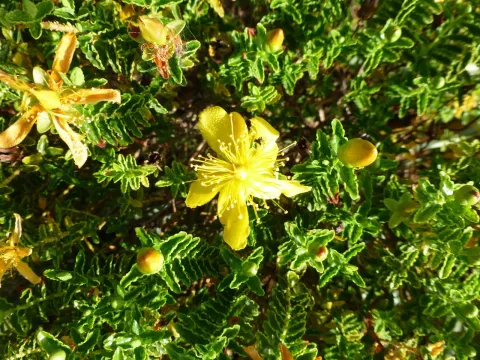
Balearen St. John's wort
Hypericum balearicum
Hypericum balearicum, commonly known as the Balearen St. John's wort, is an evergreen shrub belonging to the Hypericaceae family. It is native to the Balearic Islands, where it thrives in rocky, Mediterranean habitats, adapting well to sun-drenched and dry environments.
What the section contains
Balearen St. John's wort
The plant is botanically distinctive due to its wrinkled, wavy-margined leaves that provide a unique texture compared to other Hypericum species. It produces bright yellow flowers in the summer, which are typical for the genus, featuring numerous prominent stamens.
Cultivation requirements for this shrub focus primarily on well-draining, calcareous soils. It is highly intolerant of waterlogged conditions, which can quickly lead to root rot; therefore, providing excellent drainage is critical for its long-term survival.
Climate needs are strictly Mediterranean. The species is not frost-hardy and requires protection in regions with harsh winters. In colder climates, it is typically cultivated as a container plant, allowing it to be moved to a sheltered environment during the winter months.
The main horticultural use of this species is in landscaping, specifically for rock gardens or arid borders. Its compact form and attractive foliage make it an excellent choice for xeriscaping, where its drought-tolerant nature can be fully utilized.
The primary threat to the health of Hypericum balearicum is soil moisture management. Excessive watering or poor drainage results in root fungal infections, which are the leading cause of plant mortality in domestic and professional cultivation.
Pests such as spider mites and aphids can become problematic during hot, stagnant weather. These insects can cause significant damage to the foliage, weakening the shrub and making it more susceptible to environmental stressors.
Fungal diseases, including leaf spot pathogens, may occur if the foliage remains wet for extended periods. Proper spacing between plants is essential to ensure adequate air circulation, which helps keep the plant foliage dry and prevents fungal growth.
Cold winter winds can desiccate the evergreen leaves and damage the stems. Providing a windbreak or covering the plant with frost cloth is recommended in borderline hardiness zones to protect the structure of the shrub.
Integrated pest management and regular monitoring are essential for maintaining a healthy plantation. Pruning damaged or diseased branches promptly helps prevent the spread of infections and encourages new, vigorous growth in the spring.