
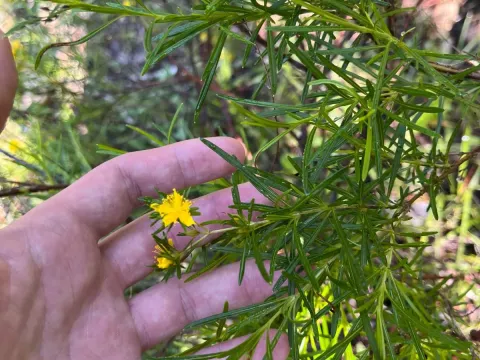
Hybrid St. John's wort
Hypericum nothum
Hybrid St. John's wort is a perennial herbaceous plant belonging to the Hypericaceae family. It is a highly valued agricultural crop known for its consistent production of bioactive compounds used in the pharmaceutical industry.
What the section contains
Hybrid St. John's wort
The sowing process is recommended to begin in early spring once soil temperatures reach approximately 10 degrees Celsius. In regions with mild climates, late autumn sowing can also be successful to ensure early spring germination.
Due to the extremely small size of the seeds, they should be sown shallowly, ideally at a depth of no more than 0.5 to 1 cm. Firming the soil with a roller after sowing is essential to ensure good seed-to-soil contact.
Mechanical row planting is the preferred method, with row spacing of 45 to 60 cm. This layout allows for efficient weeding and maintains optimal airflow between the rows, reducing the risk of disease.
Germination typically occurs within two to three weeks under favorable conditions. During the first year, the plant focuses on establishing a strong root system before focusing on vegetative growth in subsequent seasons.
Hybrid St. John's wort thrives in well-lit areas with protection from strong winds. The plant is quite hardy and shows good resistance to temporary water deficits once established.
The ideal soil for this crop is a fertile, well-drained loam or sandy loam with a neutral to slightly acidic pH. Avoiding waterlogged areas is crucial, as poor drainage is the primary cause of root failure.
During the growing season, moderate application of phosphorus and potassium fertilizers promotes healthy growth and increases the chemical potency of the herb. Nitrogen should be used sparingly to avoid excessive leafy growth.
Weed control is vital, especially during the establishment phase. Regular inter-row cultivation helps maintain soil moisture and prevents weeds from competing for nutrients and sunlight.
Irrigation is only necessary during prolonged droughts. Deep root systems allow the plants to tolerate varied moisture conditions, making them relatively easy to manage compared to more delicate herbs.
The main objective of cultivation is the harvest of the aerial parts, which are collected during the peak flowering stage. This timing ensures the highest concentration of hypericin and other therapeutic compounds.
Productivity peaks between the second and third years of life. With proper care, a plantation can remain economically productive for several years before needing rejuvenation.
Under intensive cultivation, the yield of dried raw material can reach 1.5 to 2.5 tons per hectare. Proper drying techniques are essential to maintain the quality required by manufacturers.
The crop is highly sought after by the global market for use in herbal medicines, particularly for its recognized antidepressant and anti-inflammatory properties.
Efficiency is maximized through long-term plantation management, as established root systems require less intervention and provide more stable, uniform yields over time.
The most significant threats to Hybrid St. John's wort are fungal infections such as root rot and fusarium wilt. These are primarily caused by poor drainage or excessive soil moisture.
Pests like aphids and leaf beetles can cause substantial damage to the foliage and buds. Integrated pest management strategies should be employed to control these outbreaks effectively.
- Rotate crops to prevent the accumulation of soil-borne pathogens.
- Maintain proper spacing to improve air circulation and prevent fungal growth.
- Use certified healthy seeds to minimize initial contamination risk.
Sanitation is key; removing plant debris after the final harvest helps break the life cycle of many common field pests and pathogens.
If chemical interventions are necessary, they should be chosen carefully and applied according to strict safety guidelines to ensure the final herbal product is free of harmful residues.
Harvesting is performed by cutting the upper part of the stems, typically 15 cm above the ground. Modern harvesting machinery is highly effective for this crop on larger commercial scales.
The raw material should be harvested on dry, sunny days. It is critical to dry the biomass quickly in a temperature-controlled environment, ideally at 40–50 degrees Celsius, to preserve color and potency.
After drying, the herb should be stored in cool, dark, and well-ventilated conditions to prevent degradation of the active ingredients.
In warm climates with long growing seasons, a second cut may be possible; however, this depends on the plant's recovery rate and the available moisture in the soil.
Post-harvest management involves clearing the field of weeds and providing a light fertilizing application to support the plants as they prepare for the dormant period.