
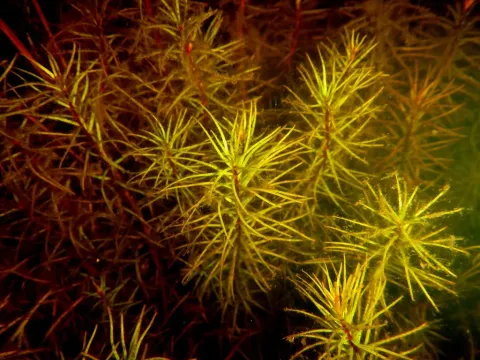
Lagarosiphon verticillifolius
Lagarosiphon verticillifolius
Lagarosiphon verticillifolius is a submerged aquatic plant belonging to the Hydrocharitaceae family. It is characterized by its whorled leaf arrangement and long, flexible stems that grow towards the surface in still or slow-moving freshwater systems.
What the section contains
Lagarosiphon verticillifolius
The plant originates from warm regions and thrives in environments where water temperatures remain consistent. It possesses a high level of phenotypic plasticity, allowing it to adapt to various depths depending on the clarity and light penetration of the water column.
In terms of agricultural requirements, this plant prefers nutrient-rich water. It obtains most of its essential minerals directly through its leaves, which reduces the need for a deep or nutrient-rich substrate, although a sandy or gravelly base helps in initial anchorage.
Proper light management is critical for the healthy development of this species. High intensity light levels promote compact growth, whereas shade leads to elongation and fragility of the stems, making the plant more susceptible to mechanical damage during maintenance.
Commercially, it is valued for its role in oxygenating water and providing cover for aquatic life. Its rapid growth cycle allows for frequent propagation via cuttings, making it a sustainable plant for ornamental water gardens and controlled aquatic systems.
The main threats to the plant include competition from filamentous algae, which can smother the foliage and inhibit photosynthesis. This is usually triggered by an imbalance in water parameters, particularly an excess of nitrates or phosphates in the aquatic system.
Lagarosiphon verticillifolius is highly sensitive to certain algaecides and heavy metal treatments. Exposure to such chemicals often results in the immediate shedding of leaves, which can lead to a total collapse of the stems if the toxicity levels remain elevated.
Mechanical pests, such as aquatic snails, can graze on the succulent leaves, leaving the stems vulnerable to rot. While these injuries are often minor, they can act as entry points for pathogens that thrive in stagnant or poorly filtered water conditions.
Temperature fluctuations are a significant physiological stressor. Sudden drops below the preferred range can inhibit enzymatic activity, leading to slow growth and increased susceptibility to fungal decay at the base of the stems.
Effective management requires consistent pruning and debris removal to maintain flow and light access. Because of its potential to become invasive, all discarded plant material should be dried or composted thoroughly to prevent it from entering local waterways.