
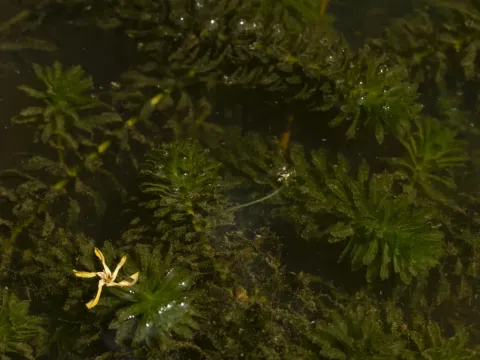
Hydrilla
Hydrilla Rich.
Hydrilla (Hydrilla verticillata) is a perennial submersed aquatic plant belonging to the Hydrocharitaceae family. It is recognized as one of the most prolific aquatic macrophytes globally, known for its rapid growth rate and ability to colonize diverse freshwater ecosystems.
What the section contains

Hydrilla
Originating from the warmer regions of Asia, Africa, and Australia, this plant has successfully naturalized in various parts of the world. It is highly versatile and can survive in a wide range of water conditions, including lakes, rivers, drainage canals, and reservoirs.
The plant thrives in water temperatures ranging from 20°C to 30°C. It exhibits remarkable physiological adaptations, such as the ability to perform photosynthesis at very low light intensities, which allows it to grow in deeper or more turbid waters compared to other aquatic species.
Hydrilla is not selective about its substrate; it anchors effectively in silt, mud, and sand. It efficiently extracts nutrients, particularly nitrogen and phosphorus, directly from the water column, which supports its explosive biomass production in nutrient-rich environments.
In terms of agricultural and environmental management, it is classified as an invasive species in many regions. Controlling its spread is essential to maintain water flow in irrigation channels and to prevent the degradation of native aquatic biodiversity.
The primary biological threats to Hydrilla include specialized herbivorous insects that originate from its native range. Research has focused on utilizing specific species of moths and weevils to provide biological control of excessive Hydrilla populations.
Pathogenic fungi, such as species within the Fusarium and Pythium genera, can cause significant damage to Hydrilla colonies. These pathogens often target the plant during periods of high density, leading to localized die-offs and biomass reduction.
Competition from other aquatic macrophytes can also hinder the growth of Hydrilla, particularly in ecosystems where native species are well-established. However, Hydrilla's high photosynthetic efficiency often allows it to outcompete native flora in disturbed habitats.
Management of invasive Hydrilla often requires integrated pest management (IPM) strategies, combining mechanical harvesting and biological control. Mechanical control is frequently used, although it requires careful execution to prevent vegetative fragments from spreading to new areas.
Chemical control involving aquatic-safe herbicides remains a common practice in industrial water management. These chemicals must be carefully selected to ensure minimal impact on non-target aquatic organisms and water quality standards.