
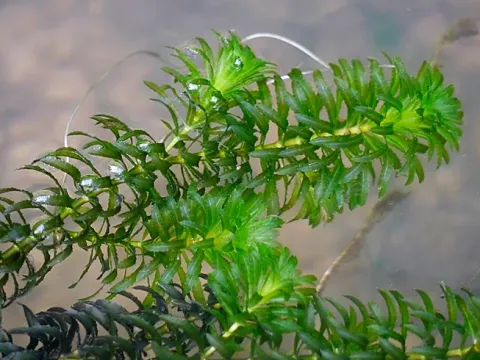
Hydrilla
Hydrilla
Hydrilla, or Hydrilla verticillata, is a submerged aquatic perennial plant belonging to the Hydrocharitaceae family. Often referred to as the world's worst aquatic weed, it is notorious for its rapid colonization of freshwater lakes, rivers, and irrigation canals.
What the section contains
Hydrilla
Originating from the warmer regions of Asia, Africa, and Australia, it has become widely distributed globally. It is highly adapted to diverse environments, thriving in various light conditions and water depths, which allows it to outcompete native vegetation effectively.
The plant grows vigorously, forming dense mats that can reach the surface of the water. Its physiological advantages include a high efficiency in carbon dioxide uptake, which permits photosynthesis in conditions where other aquatic plants would be severely limited.
Hydrilla propagates through a sophisticated vegetative system consisting of stem fragments, turions (wintering buds), and underground tubers. These structures ensure survival during periods of drought or cold, allowing the plant to remain dormant in sediments for years.
Management of this species is critical for maintaining infrastructure such as hydroelectric dams, irrigation networks, and shipping channels. Integrated pest management strategies are commonly employed to restrict its dominance in non-native territories.
Biocontrol agents, such as specific species of fish and insect herbivores, are frequently used to manage Hydrilla populations in an environmentally friendly manner.
Pathogenic fungi, such as Mycoleptodiscus terrestris, are known to infect and reduce the biomass of Hydrilla stands, serving as a biological alternative to chemicals.
The primary threat of this plant is the ecological disruption caused by dense canopy formation, which alters water quality, dissolved oxygen levels, and habitat structure for fish.
Mechanical harvesting poses the danger of fragment dispersal, as even small pieces of the plant can establish new infestations elsewhere if not properly contained.
Chemical control remains the most frequent intervention, although managing herbicide resistance and minimizing non-target impacts continue to be major challenges in aquatic weed science.