
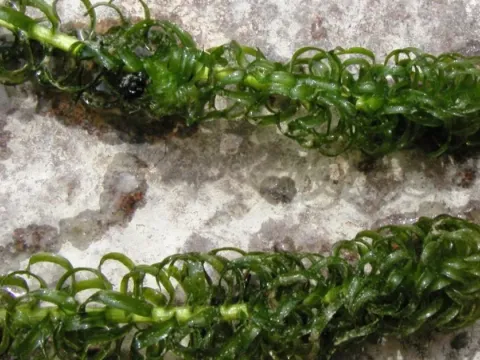
Lagarosiphon madagascariensis
Lagarosiphon madacascariensis
Lagarosiphon madagascariensis is a submerged aquatic plant belonging to the Hydrocharitaceae family. Endemic to the island of Madagascar, this species typically thrives in stagnant or slow-moving freshwater habitats, where it forms dense, oxygenating colonies.
What the section contains
Lagarosiphon madagascariensis
The botanical structure of this plant consists of elongated, flexible stems densely covered with narrow, linear leaves. This morphology allows the plant to maximize its surface area for nutrient absorption, which is an essential adaptation for life in the nutrient-poor waters often found in its natural range.
Cultivation requirements for this species include consistent water temperatures maintained between 20°C and 26°C. It is particularly sensitive to water quality, requiring a stable environment with moderate levels of carbon dioxide and essential macro-nutrients to sustain continuous growth.
Lighting is a critical factor for the vigor of the plant; it requires moderate to bright indirect light to prevent the stems from becoming etiolated. In a managed environment, proper light management ensures the plant remains compact and maintains its characteristic vibrant green coloration.
The primary horticultural application of Lagarosiphon madagascariensis is in aquatic landscaping and aquarium maintenance. It serves as a natural bio-filter, helping to strip excess nitrates and phosphates from the water, which contributes to the overall clarity and biological health of the aquatic ecosystem.
The most significant threats to this species include infestation by filamentous algae, which compete for light and nutrients. Furthermore, the plant is susceptible to necrotic tissue breakdown if the water chemistry fluctuates drastically or if there is an abrupt change in the lighting duration.