
Thalassia
Thalassia
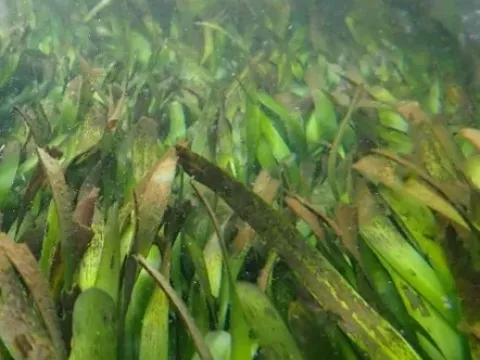
Thalassia is a genus of marine seagrasses belonging to the Hydrocharitaceae family. These plants are essentially underwater meadows that play a fundamental role in maintaining coastal biodiversity.
What the section contains

Thalassia
The ecological requirements for Thalassia include warm, saline environments with high water clarity. It thrives primarily in tropical and subtropical regions where light penetration is optimal.
Substrate composition is a vital requirement; the plant favors soft, sandy, or silty bottoms which allow its extensive rhizome system to anchor securely against strong currents.
Regarding cultivation efforts, scientists focus on ecological restoration through transplantation. This involves harvesting healthy patches and replanting them into areas where the grass bed has been lost.
Water quality parameters, such as the absence of excessive nitrogen runoff and high turbidity, are essential for maintaining the health of a Thalassia colony during its growth cycle.
Eutrophication is one of the most severe threats to Thalassia, as excess nutrients stimulate the growth of epiphytic algae that smother the seagrass blades.
Dredging operations for coastal development cause massive physical damage to beds, often leading to long-term degradation of the local marine habitat.
Climate change poses a risk through sea-level rise and increasing water temperatures, which can exceed the thermal tolerance of certain Thalassia species.
Various pathogens can lead to localized "wasting diseases," causing rapid leaf drop and eventual decay of the entire underwater meadow structure.
The impact of maritime activities, including boat anchoring and propeller scarring, creates permanent damage to the dense root networks, often taking years to recover.