
Japanese blyxa
Blyxa japonica
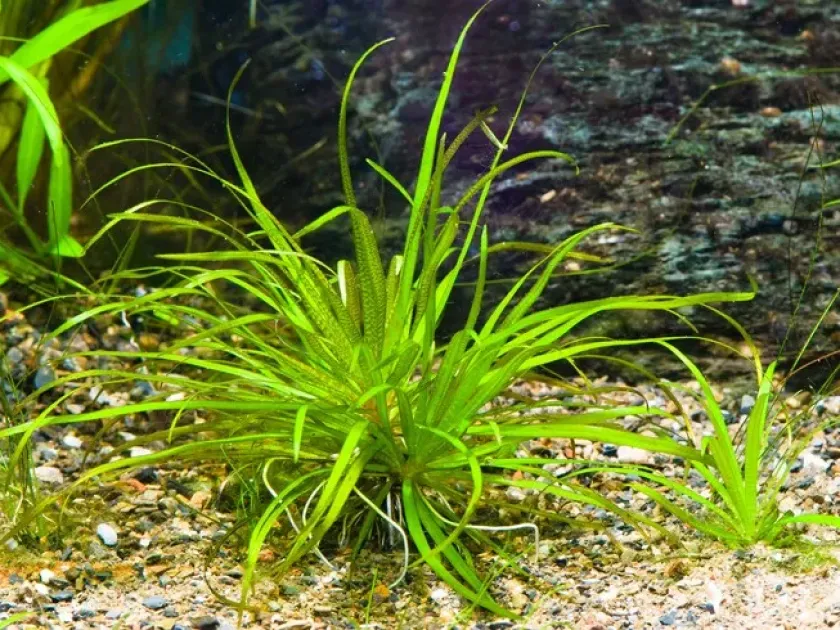
Description
Growing requirements
Japanese blyxa (Blyxa japonica) is an aquatic plant belonging to the Hydrocharitaceae family. It originates from East and Southeast Asia, where it is commonly found in tropical freshwater habitats, including slow-moving streams and flooded agricultural fields such as rice paddies.
The plant is characterized by its grass-like appearance, forming dense clusters of linear leaves. It possesses a well-developed root system, which allows it to thrive in nutrient-rich substrates, making it an excellent candidate for aquascaping and intensive aquatic cultivation.
To ensure optimal development, Japanese blyxa requires high light intensity. Strong illumination triggers the production of reddish or golden pigments in the leaves and promotes the formation of compact, low-growing bushes that characterize healthy specimens.
Water quality parameters must remain stable. The ideal environment includes a temperature between 22 and 28 degrees Celsius, slightly acidic water (pH 5.5–6.5), and soft to medium hardness. Such conditions mirror its natural ecological niche.
Agrotechnical maintenance includes CO2 injection and regular fertilization. Because this species is a heavy root feeder, providing a nutrient-rich soil substrate is essential for sustaining vigorous growth and rapid propagation of the mother plant.
Main diseases and pests
The main threat to Japanese blyxa is the invasion of filamentous algae. These organisms thrive in the same high-light conditions as the plant, and if unchecked, they quickly cover the leaves, obstructing light and preventing essential nutrient uptake.
Substrate compaction poses a significant physiological risk. If the soil becomes anaerobic, the roots are unable to respire, leading to root rot. Regular maintenance to prevent organic buildup in the substrate is necessary to maintain plant health.
Nutrient imbalances often result in visible chlorosis. Specifically, a deficiency in iron or potassium leads to pale or necrotic leaf tips, which significantly weakens the plant and makes it susceptible to further environmental stress.
Sudden shifts in water chemistry, especially rapid changes in salinity or pH, are detrimental. Such fluctuations often cause the plant to enter a state of shock, leading to leaf shedding and the collapse of the entire cluster within a few days.
Pathogenic microorganisms in poorly maintained water systems can infect damaged tissues. Once a section of the plant starts to decay, it often releases enzymes that can cause rapid spread of necrosis throughout the entire colony.