
Lagarosiphon
Lagarosiphon
Lagarosiphon is a genus of submerged perennial aquatic plants belonging to the family Hydrocharitaceae. Native to the freshwater systems of Africa and Madagascar, these plants are highly regarded for their ability to thrive in various aquatic environments, functioning as both an ornamental and an environmental bioremediator.
What the section contains

Lagarosiphon
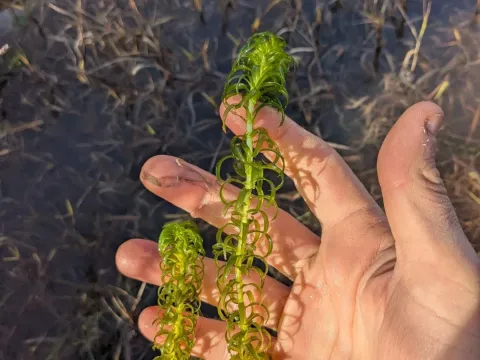
The morphology of Lagarosiphon is defined by long, flexible stems that are densely packed with spirally arranged, narrow leaves. The plant does not require a complex root system to survive, as it efficiently absorbs nutrients from the water column through its submerged foliage, which is a key trait for its success in hydroponic or aquatic setups.
Success in cultivating Lagarosiphon depends on maintaining a stable water temperature between 18 and 25 degrees Celsius. Ample light is essential; without sufficient illumination, the stems will stretch and lose their density. The plant is adaptable to a range of water hardness levels but performs best in well-circulated, nutrient-rich water.
Propagation is strictly vegetative, making the plant very easy to manage. By cutting healthy stem segments and planting them into the substrate or allowing them to float initially, the grower can expand the population rapidly. This ease of reproduction is why the plant is favored by both professional aquascapers and hobbyists.
In terms of usage, Lagarosiphon is prized for its high oxygenation potential and its ability to rapidly consume nitrates. These features make it an excellent choice for stabilizing water chemistry in newly established ponds or aquariums, provided that the gardener monitors its growth to prevent it from becoming invasive in uncontrolled outdoor waters.
The primary threats to Lagarosiphon health include competition from filamentous algae and potential damage from herbivorous aquatic snails. Monitoring water parameters and maintaining a balance of nutrients is crucial to prevent these biological challenges.