
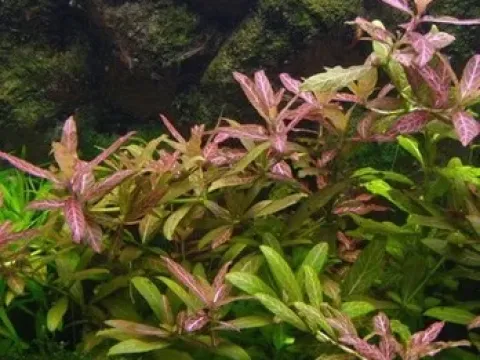
Hygrophila rosanervis
Hygrophila rosanervis
Hygrophila rosanervis is a distinguished member of the Acanthaceae family. It is a variegated variety of the common Hygrophila polysperma, highly valued for its striking pinkish-white veins that contrast sharply with the green leaf blade.
What the section contains
Hygrophila rosanervis
Originating from the tropical regions of Southeast Asia, this species has become a staple in aquatic horticulture. Its adaptability and rapid growth rate make it a favorite for aquascaping and planted tanks worldwide.
The plant thrives in water temperatures between 22°C and 28°C, with a pH balance maintained between 6.0 and 8.0. It requires moderate to high light intensity to express the specific coloration of its venation, which is its most desirable aesthetic trait.
Regarding substrate, the plant prefers nutrient-rich mediums that facilitate strong root development. While it can absorb nutrients from the water column, root fertilization ensures robust growth and vibrant leaf patterns throughout the plant's life cycle.
Cultivation involves frequent pruning to maintain a bushy form. Propagation is easily achieved through stem cuttings, which can be replanted into the substrate, where they develop new root systems very quickly under favorable conditions.
The most common threat to this plant is the sudden alteration of water parameters, which leads to leaf shed and stunted growth. Maintaining a stable environment is crucial for its long-term health and vitality.
Algae infestations, particularly those caused by excess nutrients or poor lighting cycles, often attach to the leaves. This prevents photosynthesis and can eventually cause the death of the affected plant segments.
Nutrient deficiencies, specifically a lack of potassium or iron, frequently lead to chlorosis and the development of small holes in the foliage. Supplementing the water with professional-grade liquid fertilizers is essential to prevent these issues.
Inadequate light exposure often leads to etiolation, where the plant grows tall and thin with significant gaps between nodes, losing its compact and decorative appeal entirely.
High levels of organic waste and poor circulation can result in root rot, causing the plant to detach from the substrate and decompose, especially in densely packed aquarium setups.