
Limnobium
Limnobium
Limnobium is a genus of aquatic plants belonging to the family Hydrocharitaceae. In agricultural applications, specifically within aquaculture, Limnobium is valued as a fast-growing biomass source that effectively filters nitrate and phosphate from water systems.
What the section contains

Limnobium
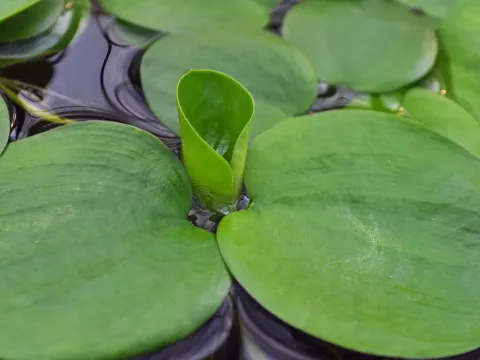
Native to tropical and subtropical regions of the Americas, the plant is adapted to floating on the surface of stagnant or slow-moving water bodies. It develops dense rosettes of leaves supported by specialized spongy tissue that provides buoyancy.
For successful cultivation, the water temperature should be maintained between 20 and 28 degrees Celsius. The plant requires intense and consistent lighting to drive photosynthetic processes, as well as adequate access to atmospheric air for gas exchange.
The optimal pH range for growth is between 6.0 and 7.5. While the plant is adaptable to various water hardness levels, it generally thrives in soft water, where its extensive root system can efficiently absorb minerals directly from the water column.
Propagation occurs primarily through vegetative growth, with the plant producing runners and daughter rosettes. Under ideal conditions, a Limnobium colony can cover a water surface rapidly, providing essential natural shading for underlying aquatic organisms.
The productivity of Limnobium is measured by its rapid biomass accumulation. In industrial aquaculture, the plant is effectively used for phytoremediation, as it exhibits a high capacity for nutrient uptake from treated water systems.
Biomass yield is directly correlated with nutrient availability, particularly nitrogenous compounds. In high-intensity growing systems, the plant serves as a vital tool for maintaining water quality through continuous nutrient extraction.
Daily coverage growth rates are significant when environmental parameters are optimized. Periodic harvesting of the biomass is essential to ensure the health of the population and to prevent the accumulation of decaying organic matter.
Agricultural use includes the plant serving as a spawning substrate for various fish species. Furthermore, processed green biomass can potentially be integrated into high-nutrient feed supplements for livestock or specialized aquaculture applications.
Managing planting density is critical, as excessive coverage can negatively impact dissolved oxygen levels and light penetration in deeper areas of the water body, which may disrupt the overall ecosystem balance.
Fungal infections pose the primary threat to Limnobium, particularly when high ambient humidity or low air temperatures occur. Such conditions often lead to the development of necrotic spots on the leaves, which can reduce the plant's viability.
Pests such as aphids may colonize the upper leaf surfaces, leading to structural damage and stunted growth. Integrated pest management, focusing on biological controls that are safe for aquatic fauna, is required to maintain a healthy colony.
Physical damage to the leaves increases the plant's susceptibility to bacterial pathogens. Careful handling is required, and ensuring the surface remains free of condensation or mechanical debris is crucial for disease prevention.
Competition from other fast-growing aquatic plants can lead to the suppression of Limnobium. It is necessary to keep the culture pure and perform regular monitoring to prevent the invasion of unwanted species into the growing area.
Micronutrient deficiencies often manifest as leaf chlorosis. Consistent monitoring of water chemistry and the application of aquatic-safe fertilizers are necessary to maintain the plant's health and maximize its overall agricultural productivity.