
Frogbit
Hydrocharis
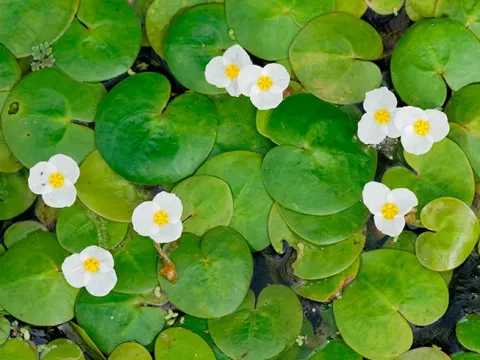
Frogbit (Hydrocharis morsus-ranae) is a perennial aquatic plant belonging to the Hydrocharitaceae family. It is widely recognized for its floating habit and heart-shaped leaves that resemble small water lilies.
What the section contains


Frogbit
Native to Europe and parts of Asia, this plant thrives in quiet, nutrient-rich waters. It is commonly found in ponds, ditches, and slow-moving streams where it can easily establish its floating colonies.
Botanically, it features runners that allow the plant to propagate vegetatively at a rapid rate. The roots are submerged and play a vital role in nutrient absorption directly from the water column.
Environmental requirements include a stable water level and adequate sunlight exposure. It prefers warm conditions during the growing season, which stimulates the development of its white flowers.
In terms of practical utility, it is highly valued for phytoremediation. It acts as a natural water purifier, effectively sequestering excess nutrients and preventing the overgrowth of harmful algae.
The primary threat to the stability of frogbit populations is the degradation of water quality caused by excessive agricultural runoff and chemical pollution.
Physical disturbances, such as boat traffic or mechanical clearing of water bodies, can severely disrupt the growth patterns and lead to the fragmentation of the plant colonies.
Insect pests, specifically larvae that feed on the leaf tissue, can cause significant damage. Frequent infestations can weaken the plants and lead to a decline in population density.
Fungal pathogens represent a major health issue for this species, especially when stagnant water conditions lead to poor ventilation and higher humidity around the foliage.
Management of the plant is necessary because it can become invasive in certain environments, leading to the depletion of dissolved oxygen and threatening other aquatic life forms.