
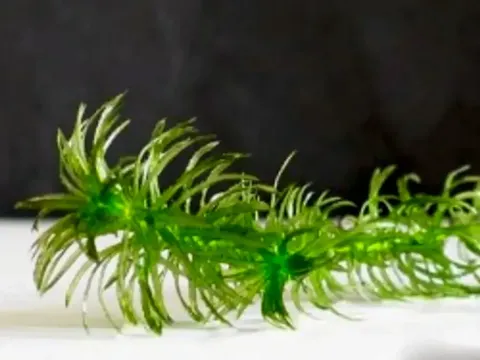
Elodea granatensis
Elodea granatensis
Elodea granatensis is a submerged perennial aquatic plant belonging to the Hydrocharitaceae family. Originating from South American tropical zones, it is widely recognized for its robust growth habit in slow-moving freshwater ecosystems.
What the section contains
Elodea granatensis
The plant requires stable environmental conditions, typically thriving in water temperatures ranging from 20°C to 26°C. Ample lighting is essential to ensure a healthy photosynthetic rate; otherwise, the plants may become sparse and lose their vigor.
Regarding substrate requirements, Elodea granatensis absorbs nutrients primarily through its foliage rather than relying heavily on the soil base. This makes it an excellent candidate for nutrient-rich aquatic environments where it acts as a natural water purifier.
Agrotechnical management involves maintaining a water pH balance of approximately 6.5 to 7.5. Consistent water movement is beneficial, as it ensures an even distribution of nutrients and oxygen, preventing local zones of depletion around the dense plant mats.
Effective cultivation techniques require regular monitoring of biomass density. As the plant is a prolific grower, periodic harvesting or thinning is necessary to prevent overcrowding, which could otherwise limit the light exposure to the lower portions of the plant stems.
Harvesting of the crop is carried out by mechanical trimming of the stems. Because the plant exhibits strong regenerative capabilities, harvesting does not typically harm the main root structure, allowing for continuous cultivation cycles throughout the year.
The primary threats to Elodea granatensis include competition from invasive filamentous algae that may shadow the plant's surface. Additionally, certain gastropods and insect larvae can cause structural damage to the stems, impacting overall crop quality.