
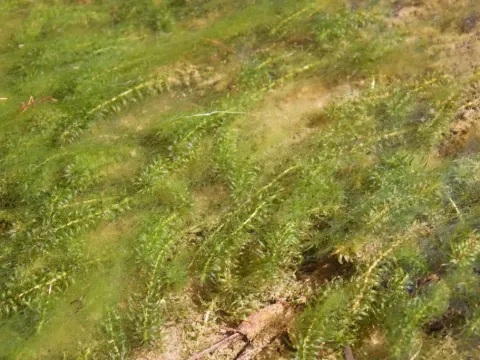
Elodea
Elodea
Elodea is a genus of aquatic plants belonging to the Hydrocharitaceae family. These submerged perennials are widely recognized for their ability to thrive in a variety of freshwater ecosystems, including ponds, lakes, and slow-moving rivers.
What the section contains

Elodea
Originating from North America, Elodea has established itself globally. Its successful spread is attributed to its high growth rate and ability to propagate through simple stem fragmentation, making it a highly resilient species.
The plant requires moderate sunlight and water temperatures ranging from 16 to 24 degrees Celsius. It performs photosynthesis efficiently in stagnant or low-current water, effectively absorbing minerals directly from the water column.
While Elodea does not strictly require nutrient-rich soil, a silt-rich substrate encourages better anchorage and more robust growth patterns, especially in managed aquatic environments.
Successful cultivation practices involve monitoring water quality parameters to ensure consistent growth and preventing the plant from becoming an invasive hazard in local native water bodies.
Elodea is known for its rapid biomass production. Under optimal environmental conditions, it can double its mass in a relatively short period, making it a highly productive aquatic crop.
In agricultural practice, harvested Elodea biomass is utilized as a nutrient-rich organic fertilizer. Once dehydrated, it provides essential macro- and micronutrients for terrestrial crops.
The plant serves a critical role in aquaculture systems, providing spawning grounds for fish species and serving as a natural shelter for juvenile fish, which supports higher survival rates.
Bio-remediation is another significant area of use; Elodea is employed to extract heavy metals and excessive phosphorus from wastewater, serving as a sustainable biological water treatment tool.
The harvesting process typically involves mechanical removal, which ensures that the primary density of the plant is managed without disrupting the ecosystem balance of the pond.
The primary threats to Elodea crops include bacterial decay and fungal pathogens, which proliferate in stagnant, poorly oxygenated water where nutrient levels have become unbalanced.
Pests, such as specific aquatic beetles and certain species of snails, may graze on the foliage. While usually minor, high infestations can lead to significant damage to the plant stems.
Competition for light and space with more aggressive algal blooms often threatens Elodea, as these organisms can block necessary solar energy, leading to the starvation of the submerged biomass.
Pollution from agricultural runoff, particularly herbicides, is highly detrimental to Elodea. The plant is extremely sensitive to chemical interference, which can cause rapid and total colony collapse.
Effective management strategies emphasize proactive monitoring and the maintenance of clear, well-circulated water to mitigate the risk of pest outbreaks and disease spread.