
Enhalus
Enhalus
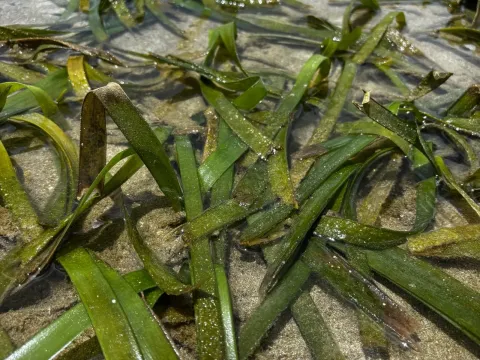
Enhalus acoroides, commonly known as ribbon seagrass, is a marine plant belonging to the Hydrocharitaceae family. It is a perennial species primarily found in the shallow tropical waters of the Indo-Pacific region.
What the section contains
Enhalus
The plant requires soft, sandy or silty substrates to establish its robust root system. It thrives in well-lit, shallow coastal areas where sunlight penetration is sufficient for photosynthesis, typically at depths of less than 5 meters.
Stability in water temperature and salinity is crucial for the development of Enhalus. It is highly adapted to tidal variations and can survive temporary exposure during extreme low tides, making it a resilient component of coastal flats.
Botanically, the plant is characterized by long, flat, strap-like leaves and a unique reproductive strategy where male flowers detach and float to the surface to fertilize female flowers on the water surface.
While not a traditional agricultural crop, Enhalus plays a significant role in coastal management. It is often the subject of conservation efforts aimed at restoring seagrass meadows that protect shorelines from erosion.
Yield in the context of Enhalus refers to the biomass production within seagrass meadows rather than conventional harvestable crops. The plant acts as a carbon sink, sequestering significant amounts of carbon within the sediment.
Growth rates are monitored through leaf turnover and rhizome extension, which indicate the health of the marine ecosystem. High productivity is observed in stable environments with low human interference.
Commercial harvesting of Enhalus is nonexistent, though localized traditional uses of the leaves, such as weaving mats or cordage, have been documented. Its primary value remains ecological and scientific.
Ongoing research into the chemical composition of Enhalus leaves suggests a potential for future industrial applications, particularly in the production of bio-based compounds, which would require sustainable cultivation techniques.
The total yield of a seagrass meadow depends heavily on water quality parameters, including the absence of pollutants and sediment stability, which are critical for maintaining continuous growth across the seabed.
The primary threats to Enhalus include coastal development and increased turbidity, which reduce the light available for photosynthesis. When light levels fall below critical thresholds, the plants struggle to sustain growth.
Eutrophication from agricultural runoff introduces excess nutrients into the marine environment, promoting the growth of algae that coat the surface of Enhalus leaves, eventually leading to plant mortality.
Mechanical damage from anchors, fishing trawlers, and dredging operations poses a severe threat, as these activities tear the plants from the substrate and disrupt the protective root network.
Climate change poses a long-term risk through rising sea levels and ocean temperatures, which alter the delicate balance required for the successful reproduction and survival of Enhalus populations.
Disease outbreaks, often exacerbated by environmental stress, can lead to the rapid decline of seagrass meadows, resulting in the loss of habitat for numerous marine species that rely on Enhalus for shelter.