
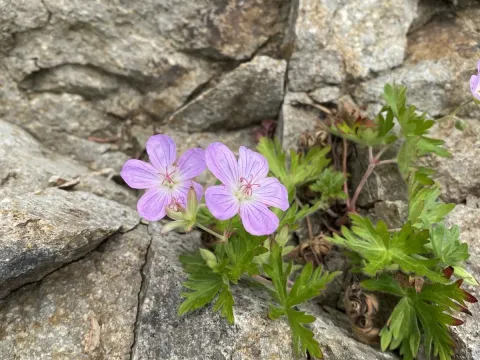
Yezo cranesbill
Geranium yesoense
Geranium yesoense, commonly known as the Yezo cranesbill, is a robust herbaceous perennial species belonging to the Geraniaceae family. It is prized for its ability to thrive in cool, temperate environments.
What the section contains
Yezo cranesbill
This species is native to Northeast Asia, including regions of Japan and the Russian Far East. It typically occupies meadows, woodland edges, and moist slopes where temperatures remain moderate throughout the growing season.
For successful cultivation, the plant requires moist, well-draining soil rich in organic matter. While it tolerates various soil types, maintaining consistent moisture is critical for the development of its lush foliage.
The Yezo cranesbill exhibits a preference for partial shade, though it can withstand fuller sun exposure in northern climates if soil moisture levels are adequately maintained during peak summer.
As a perennial groundcover, this plant is valued for its hardiness and low-maintenance nature, making it an excellent candidate for woodland gardens and shaded borders where other species might fail.
Common pathological threats include fungal infections such as powdery mildew, which often appears if the plant is subjected to poor air circulation or extended periods of high humidity.
Insect pests, including aphids and leaf-eating beetles, may occasionally infest the plants, particularly during warm and dry periods when the plant's physiological defenses are slightly lowered.
Effective management strategies include ensuring adequate spacing between individual plants to facilitate air movement, which significantly reduces the risk of fungal outbreaks.
Integrated pest management, including the use of horticultural oils or biological controls, is recommended if pest populations reach economic thresholds that damage the aesthetic appeal of the foliage.
Regular monitoring of the garden bed is essential, especially during early spring when new shoots are most vulnerable to feeding insects and emerging pathogens.