
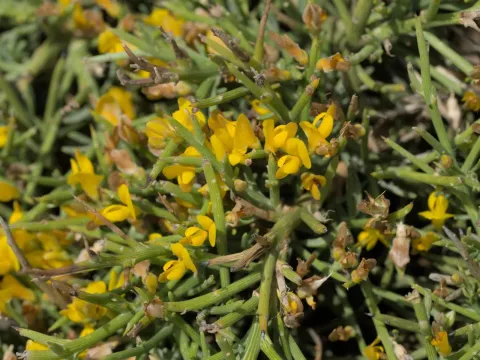
Genista acanthoclada
Genista acanthoclada
Propagation of Genista acanthoclada is typically performed through seeds or semi-hardwood cuttings. Seeds should be scarified before sowing to break their hard dormancy and ensure uniform germination.
What the section contains
Genista acanthoclada
Sowing in open ground is best timed for early spring. Seeds should be planted at a shallow depth of approximately 1 centimeter in well-drained, sandy soil to prevent rotting before emergence.
When starting in containers, provide a substrate with excellent aeration. Seedlings should be kept in a bright location until they are robust enough for transplantation to their permanent garden spot.
Transplanting into the garden should be done carefully to protect the delicate root system. Once established, the plants require minimal intervention and thrive in harsh conditions.
As a member of the Fabaceae family, this plant is capable of fixing atmospheric nitrogen, making it a valuable species for restoring nutrient-poor soils in dry Mediterranean-style landscapes.
Genista acanthoclada requires full sun exposure to flourish. It is adapted to arid environments and cannot tolerate stagnant water or shade, which quickly lead to poor growth and reduced flowering.
The ideal soil for this species is dry, rocky, or sandy with low fertility. It performs exceptionally well in poor soils where other plants struggle to survive due to lack of nutrients.
This shrub is highly drought-tolerant once established. It possesses specialized spiny stems that minimize water loss through transpiration during the hottest months of the summer.
The plant is hardy but benefits from protection against freezing winds in regions with severe winters. It prefers mild temperatures and dislikes heavy, waterlogged clay soils.
Maintenance pruning is recommended immediately after the flowering period to maintain a compact shape and encourage denser growth for the following season.
The primary concern for Genista acanthoclada is excessive soil moisture, which inevitably leads to fungal root diseases. Proper drainage is the most critical preventative measure.
Aphids are the most common insect pests, particularly affecting the succulent tips of young growth during the spring season. Targeted insecticide treatments or soap sprays can manage infestations effectively.
Powdery mildew may occur if air circulation is insufficient or if humidity levels remain high for extended periods. Pruning to maintain airflow within the crown helps reduce this risk.
Spider mites can become an issue during prolonged, intense heatwaves. Regular inspection of the undersides of leaves is advised during the peak of summer.
Overall, the plant is remarkably robust. By providing a sunny, well-drained site and avoiding excessive irrigation, the plant remains free from most diseases and pests.