
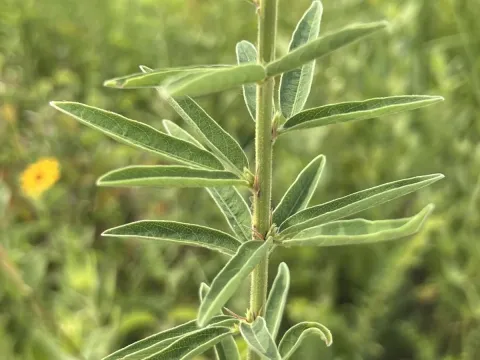
Sessile-leaf tick-trefoil
Desmodium sessilifolium
Desmodium sessilifolium is a perennial legume that requires careful planning for successful establishment. Seeds should be sown in the spring once soil temperatures are consistently warm.
What the section contains
Sessile-leaf tick-trefoil
Pre-sowing treatment, including scarification, is essential to improve germination rates. Due to the small size of the seeds, they should be planted at a shallow depth of approximately 1-2 cm.
Inoculation with specific nitrogen-fixing bacteria is highly recommended before planting. This ensures the plant can effectively contribute to soil nitrogen levels once established.
Standard row seeding is preferred to facilitate weed management during the establishment phase. Proper soil compaction after sowing helps ensure good seed-to-soil contact for moisture absorption.
Seeding rates should be adjusted based on the intended use, such as pasture reinforcement or hay production. It is often recommended to include it in a mix with other forage grasses.
This species thrives in sunny, open habitats with good exposure to sunlight. It is sensitive to shade and will show reduced vigor if grown in overcrowded or shaded areas.
The plant is adapted to well-drained soils and can tolerate sandy or gravelly textures. It performs best in soils with a neutral to slightly acidic pH, where nutrient availability is optimal.
Drought tolerance is a key feature of this crop, allowing it to survive periods of low precipitation during the summer. It remains dormant during the winter, protecting its rootstock from cold.
Poorly drained or waterlogged soils should be avoided, as the roots are susceptible to rot under such conditions. It responds well to moderate fertilization with phosphorus and potassium.
As a legume, it contributes to soil health by improving structure and fertility. Its deep root system also helps in preventing soil erosion on slopes or disturbed lands.
The primary use of Desmodium sessilifolium is as a high-quality protein source for livestock. It serves as an excellent component of permanent pastures in native prairie regions.
Forage yield is best when the plant is harvested during the early flowering stage. This timing ensures the highest protein content and digestibility for grazing animals.
Productivity increases significantly from the second year onwards as the root system matures. It helps balance the nutrient profile of forage mixtures when intercropped with grasses.
While not as high-yielding as modern cultivars of alfalfa, its resilience in marginal soils makes it valuable. It reduces the need for expensive synthetic nitrogen inputs in grazing systems.
Consistent management of grazing intensity is vital to maintain long-term yield. Overgrazing can deplete energy reserves in the roots, reducing the plant's vigor in subsequent seasons.
Weed competition is the greatest threat to seedlings during the first year. Effective suppression of competing vegetation is necessary to ensure the survival of young plants.
The crop may be affected by common leaf-spot diseases, particularly during humid seasons. Good air circulation and site selection are the best preventative strategies against such pathogens.
Insects like weevils or aphids might occasionally feed on leaves, but rarely reach levels requiring chemical control. Monitoring and early detection are usually sufficient for management.
Excessive grazing by livestock is a major risk to the plant's persistence. Rotation of grazing areas is essential to allow the plant to recover its biomass between periods of utilization.
In its natural habitat, the plant shows strong resilience to most common pests. Maintaining general ecosystem health on the farm is the most effective approach to pest management.
Harvesting for hay should be performed during the peak bloom period for maximum nutritional yield. Careful handling is required to avoid losing the nutrient-dense leaves.
Mowing height should be maintained at 7-10 cm to ensure the crown of the plant is not damaged. This practice supports faster regrowth and maintains the plant's health.
Drying the forage quickly in the field is necessary to preserve its color and vitamins. Mechanical tedding can expedite the drying process significantly during clear weather.
Seed collection can be challenging as the pods are sticky and prone to shattering. Harvesting should occur precisely when pods turn brown but before they disperse their seeds.
Proper storage in dry, well-ventilated areas ensures the quality of the forage is maintained through winter. This simple approach prevents mold development and preserves the crop's feed value.