
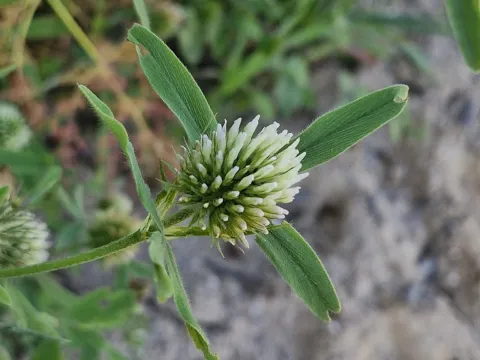
Sea clover
Trifolium squamosum
Sea clover (Trifolium squamosum) is an annual legume belonging to the Fabaceae family, recognized for its specific ecological niche in saline and coastal environments. This plant is valued for its ability to thrive where soil salinity prevents the growth of standard pasture legumes.
What the section contains
Sea clover
The native range includes the Mediterranean basin and Western Europe, where it colonizes wet, saline meadows and marshes. The species is highly adapted to climates where environmental stress factors, such as occasional flooding or brackish groundwater, occur periodically.
Cultivation requires heavy, moisture-retentive soils. Unlike many other clover species, Trifolium squamosum is specifically evolved to tolerate high sodium levels, making it a functional component for improving degraded salt-affected lands through natural phytoremediation.
Botanically, it features a semi-prostrate growth habit with characteristic, small, dense flower heads protected by prominent, scale-like bracts. Its trifoliate leaves are efficient at nitrogen fixation, a vital biological process that sustains soil fertility in mixed pasture stands.
The agricultural importance of this crop lies in its role as a forage plant in marginal grazing systems. By integrating sea clover into forage mixtures, farmers can enhance the nutritional density of pasture land while leveraging the crop's resilience to harsh environmental conditions.
The main pathological threats include fungal pathogens such as rusts and mildews, which can thrive in high-humidity microclimates within the stand. Managing soil drainage and preventing waterlogging are essential strategies for mitigating disease pressure.
Pest issues primarily involve clover-specific insects such as the clover seed weevil and various aphid species. Monitoring programs during the budding and flowering stages are recommended to prevent excessive damage to seed production and biomass yield.